Hello, this is VALVEPARK.
The gasket is one of the smallest components in a piping system. It is smaller than the palm of a hand, yet it is one of the parts that carries the most important role in a facility.
In fact, a considerable share of the leak problems that occur on industrial sites begins not in the piping itself but in the choice of gasket material or in the condition of its installation.
In processes where hygiene and stability are critical, such as the food, pharmaceutical, bio, chemical and secondary battery industries, the question of which gasket to use becomes an important factor in deciding the reliability of the facility.
Many customers ask us the same question: "What is the difference between silicone, Viton (FKM) and PTFE (Teflon) gaskets?" All three perform the same role, but the environments in which they should be used are different from one another. In this article we will look at the differences between the three sanitary gaskets in a way that is easy to follow even for a first-time user.
A sanitary gasket is the component that seals the joint between Tri-Clamp connections. A very small gap exists between one pipe and the next, and by closing that gap the gasket performs the following roles.
Put simply, it is the component that acts as the packing of the piping. Gaskets are not all made of the same material, however, and a suitable material has to be selected according to the process environment.

The most widely used standard gasket
Silicone is the material most widely used in the food and pharmaceutical industries. Because it is soft and highly elastic, it seals stably between the flange faces once the clamp is fastened. It also offers excellent hygienic properties and has almost no effect on odor or taste, so it is widely used in food processes.
Silicone is widely used in the environments above.
→ For general hygienic piping that does not involve particularly aggressive chemicals, silicone is the best choice.
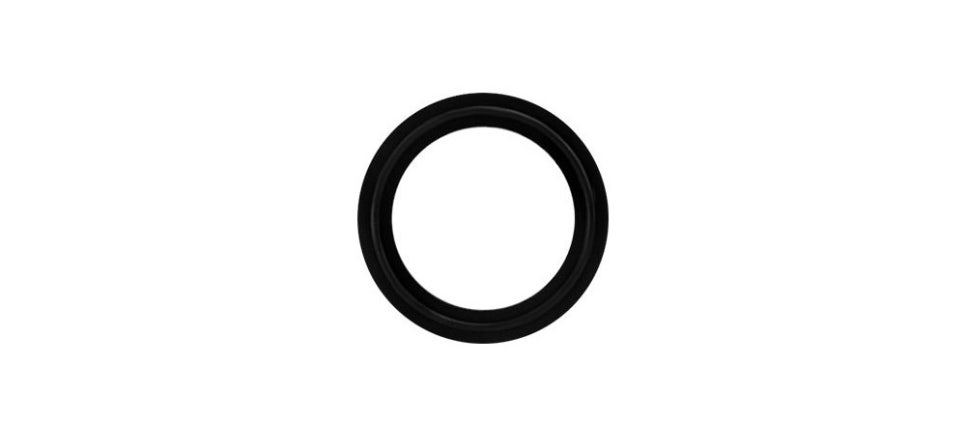
A fluoroelastomer strong against chemicals and oils
Viton is a material with far better chemical resistance and oil resistance than general rubber. It maintains stable performance not only with lubricating oils, fuels and oils in general but also with a wide range of chemicals, so it is widely used in industrial facilities. Where the environment calls for higher heat resistance and chemical resistance than silicone offers, Viton is a good choice.
Viton is widely used in the environments above, but it does not stand up to every chemical.
→ In environments with aggressive organic solvents or strong acids and strong alkalis, PTFE (Teflon) is often the more suitable choice.

A high-performance gasket with the best chemical resistance
PTFE is the material commonly called Teflon. Among the three materials it is regarded as the one with the highest chemical stability. Because it barely reacts with most organic solvents, strong acids and strong alkalis, it is used in environments that ordinary rubber gaskets cannot handle. It can also be used from approximately -200°C to +260°C, providing stable performance even in high-temperature processes.
PTFE is used in the fields above.
→ Note, however, that PTFE is not as elastic as rubber, so control of the fastening torque and periodic replacement are important.
The materials are different, but the purpose is the same. All three seal the Tri-Clamp joint to prevent fluid leakage, block outside contamination and maintain a hygienic production environment.
What the product does is the same; what differs is the question of which environment it can be used in stably for the longest time.
When selecting a gasket, many people think first of heat resistance or price, but on actual sites chemical compatibility with the fluid is the most important criterion.
For example, on piping that transfers purified water silicone alone is sufficient, but in processes that use organic solvents such as ethanol or IPA, silicone can swell or lose performance. Conversely, in processes that use corrosive chemicals such as sulfuric acid or sodium hydroxide, PTFE is a far more stable choice.
| Category | Silicone (VMQ) | Viton® (FKM) | PTFE (Teflon) |
|---|---|---|---|
| Hygiene | ★★★★★ | ★★★★☆ | ★★★★★ |
| Elasticity (recovery) | ★★★★★ | ★★★★☆ | ★★☆☆☆ |
| Oil resistance | ★★☆☆☆ | ★★★★★ | ★★★★★ |
| Chemical resistance | ★★★☆☆ | ★★★★☆ | ★★★★★ |
| Heat resistance | ★★★★☆ | ★★★★★ | ★★★★★ |
| Repeated disassembly and assembly | ◎ Excellent | ◎ Excellent | △ Fair |
| Main industries | Food, beverage, pharmaceutical, bio | Chemical, oil, cosmetics | Pharmaceutical, bio, chemical, semiconductor, secondary battery |
| Recommended fluids | Water, food, beverages, general process water | Oils, fuels, general chemicals | Organic solvents, strong acids, strong alkalis |
| Advantages | Outstanding hygiene, high elasticity, excellent sealing performance | Excellent oil resistance and chemical resistance | Best chemical resistance, copes with both high and low temperatures |
| Points to note | Not suitable for aggressive solvents | Limited with some strong acids and strong solvents | Low elasticity, so fastening torque management is required |
The answer is not to select the most expensive product, but to select the material best suited to the process.
Selecting a material that matches the operating environment is what extends gasket life and prevents unexpected leakage or a facility shutdown.
We hope this article has made the differences between sanitary gaskets a little easier to understand. In the end, a good gasket is not the most expensive product but the one selected to match the operating environment. We will continue to share technical information that is useful in practice.
Email: sales@valvepark.com | Tel: 1666-0215
VALVEPARK is a trusted specialist in industrial valve supply, offering customer-specific specifications, fast delivery, and strict quality control.