Hello, this is VALVEPARK.
Among all the components that make up a piping system, one is the smallest and yet decisive: the sanitary gasket. It is a small part, but if a single gasket fails to seal properly the contents can leak out or outside air can be drawn in, affecting product quality.
In this closing article of our gasket series, we look at the sanitary gasket in PTFE (Teflon) - what the product is and when it should be used.
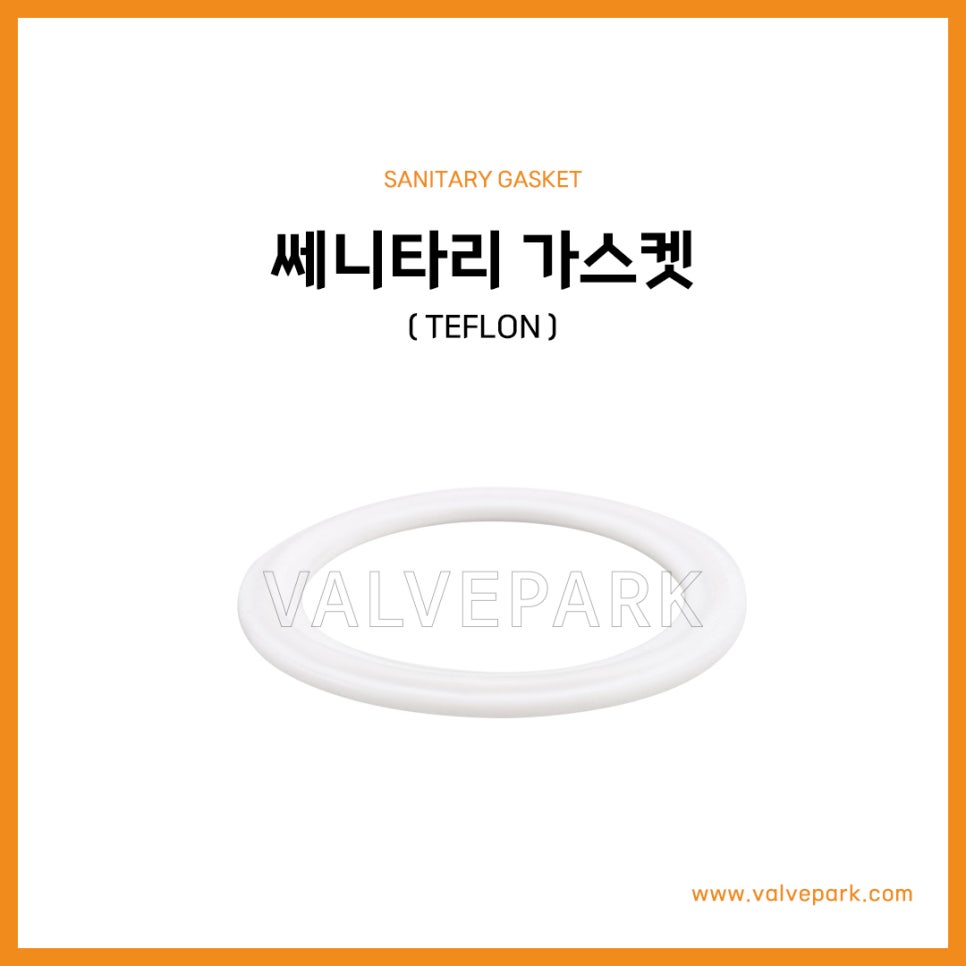
A sanitary gasket is a sealing component inserted between pipes that are joined by a Tri-Clamp connection. It closes the gap between pipe and pipe so that the fluid cannot escape, and it prevents external contaminants from entering the line. In simple terms, think of it as the packing, or sealing element, of a pipe connection.
Rubber materials such as EPDM, silicone and FKM (Viton) are the ones most commonly used. Depending on the service environment, however, there are cases these materials cannot handle. That is exactly where a PTFE (Teflon) gasket comes in.
PTFE is the abbreviation of Polytetrafluoroethylene, widely known by the name Teflon. It is a material whose properties are completely different from those of ordinary rubber. Its principal characteristics are as follows.
Thanks to these properties it is widely used not only in food plants but also across the pharmaceutical, bio, semiconductor and chemical plant industries.
The main reason is that it can be used reliably even in environments an elastomer (rubber) gasket struggles to withstand.
In conditions such as these, EPDM or silicone gaskets may swell or deform. PTFE, by contrast, does not react with most chemical substances and therefore maintains stable sealing performance over a long service life.
Where the environment is too demanding for a rubber gasket, choose PTFE.
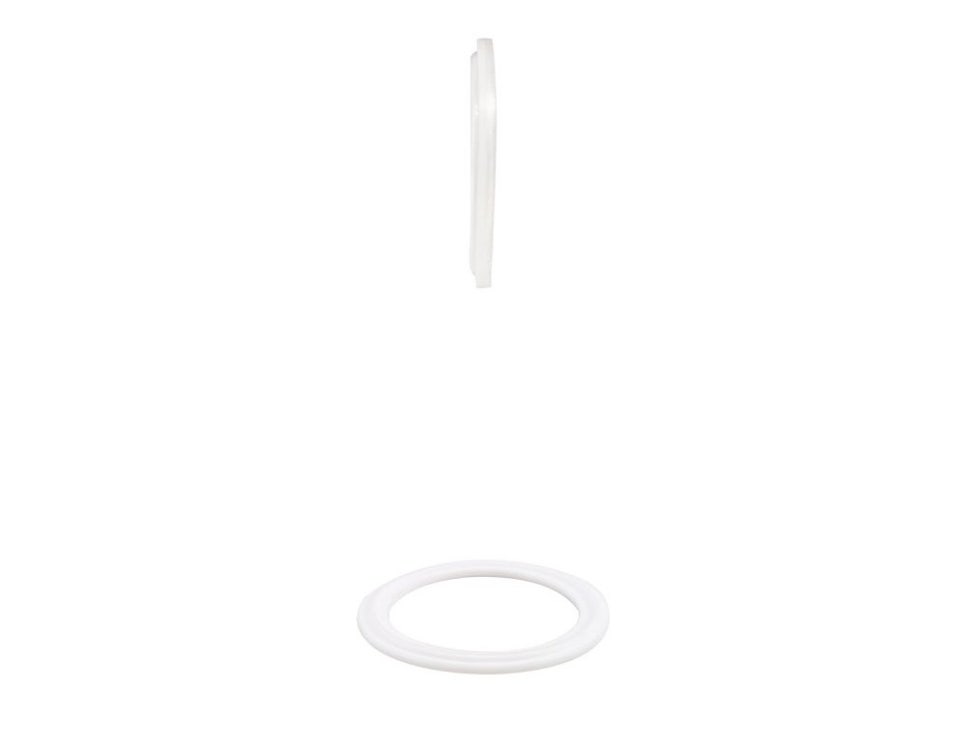
PTFE is very hard and chemically stable, but in exchange it is not as elastic as rubber. Its recovery elasticity - the force that returns it to its original shape after being compressed - is relatively low. This creates several points that require attention.
Explore the full range of gasket products at the VALVEPARK Naver Smart Store.
Product details and purchasing are available through the VALVEPARK online store.

Email: sales@valvepark.com | Tel: 1666-0215
VALVEPARK is a trusted specialist in industrial valve supply, offering customer-specific specifications, fast delivery, and strict quality control.