Basis for the decision: check the continuous operating temperature and the peak temperature that is touched only briefly, separately
Rubber seals: Viton (FKM) is around 150℃ continuous and EPDM is around 100℃ continuous
Seats: the operating temperature and allowable pressure rise in the order PTFE, filled PTFE, PEEK
All-metal: for bakeout above 200℃ use metal seals; the HTC bakeable all-metal valve is 400℃ open and 300℃ closed
Inquiry details: continuous and peak temperature, medium, pressure, size and whether bakeout is needed
Hello, this is VALVEPARK.
Seal and seat materials are chosen by separating the continuous operating temperature from the peak temperature that is touched only briefly.
Among rubbers, Viton (FKM) is generally around 150℃ continuous and EPDM around 100℃ continuous. Above that the range rises in the order PTFE, filled PTFE, PEEK, and when bakeout exceeds 200℃ the configuration moves to an all-metal design with no rubber seals.
In semiconductor and display equipment the process and bakeout temperatures rise, and in chemical and food plants the cleaning and sterilization temperatures rise. The parts that tend to reach their limits first are the valve seats and O-rings.
All temperatures below are general ranges, and even the same material has different limits depending on the grade, pressure and medium.
Viton (FKM) is generally around 150℃ continuous and EPDM around 100℃ continuous.
The continuous temperature (the temperature at which sealing holds even over a long time) and the peak temperature (the limit touched briefly during bakeout or cleaning) differ greatly for rubber. Viton withstands peaks in the 200℃ class, but held at that temperature it develops compression set, in which the O-ring hardens in its compressed shape, and the sealing force drops.
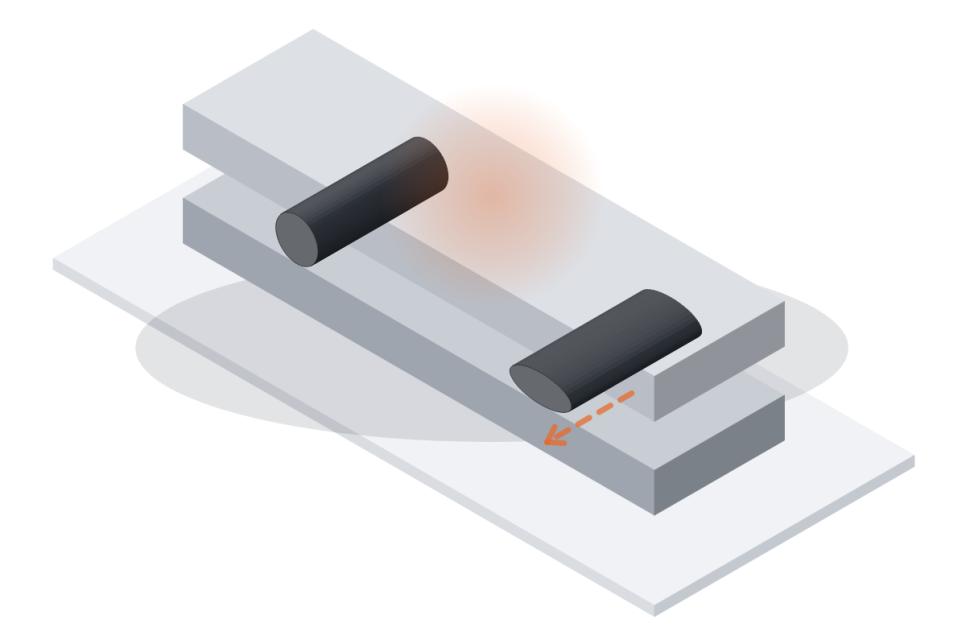
On the left, a new O-ring in contact with two surfaces; on the right, an O-ring that has hardened in its compressed shape and left a gap with the upper surface
EPDM suits media such as water, steam and alkali, and is generally around 100℃ continuous and around 120℃ peak. Some grades are listed up to 150℃ depending on the compound, so check the grade. It is not suited to oil and hydrocarbon media, so check the medium along with the temperature.
Check the continuous temperature and the peak temperature separately
Yes. When a PTFE seat reaches its limit, you move up to filled PTFE and then to PEEK.
PTFE is chemically stable and widely used for seats. However, it has cold flow (the property of the compressed area slowly flowing and deforming) under load, so it is weak under conditions where temperature and pressure are both high. The PTFE material itself is used above 200℃, but for a seat the pressure applied at the same time means the limit is set lower than the material limit, and per the catalog it is around 160℃.
Filled PTFE is a material in which glass or carbon is mixed in to reduce deformation, and is generally in the 180 to 220℃ class. As it becomes harder it loses elasticity, so sealing at low differential pressure can become less favorable. PEEK withstands temperatures of around 250℃ and high pressure, but its price is on the high side.
The allowable pressure is also set higher as you move up each step, so check temperature and pressure as a pair. For the O-ring groove of a vacuum flange, PTFE recovers poorly from compression and is generally not recommended; PTFE is used for seats and gaskets.

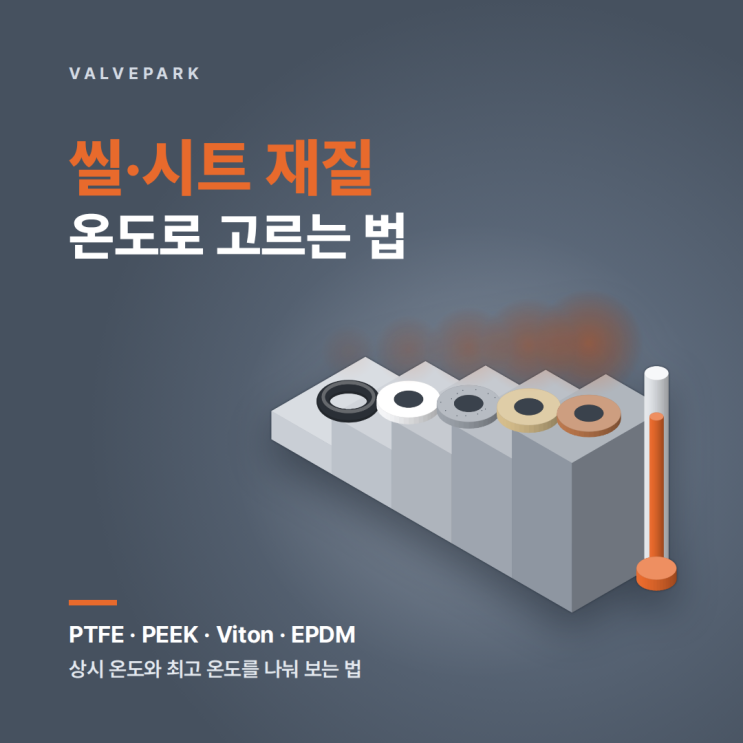
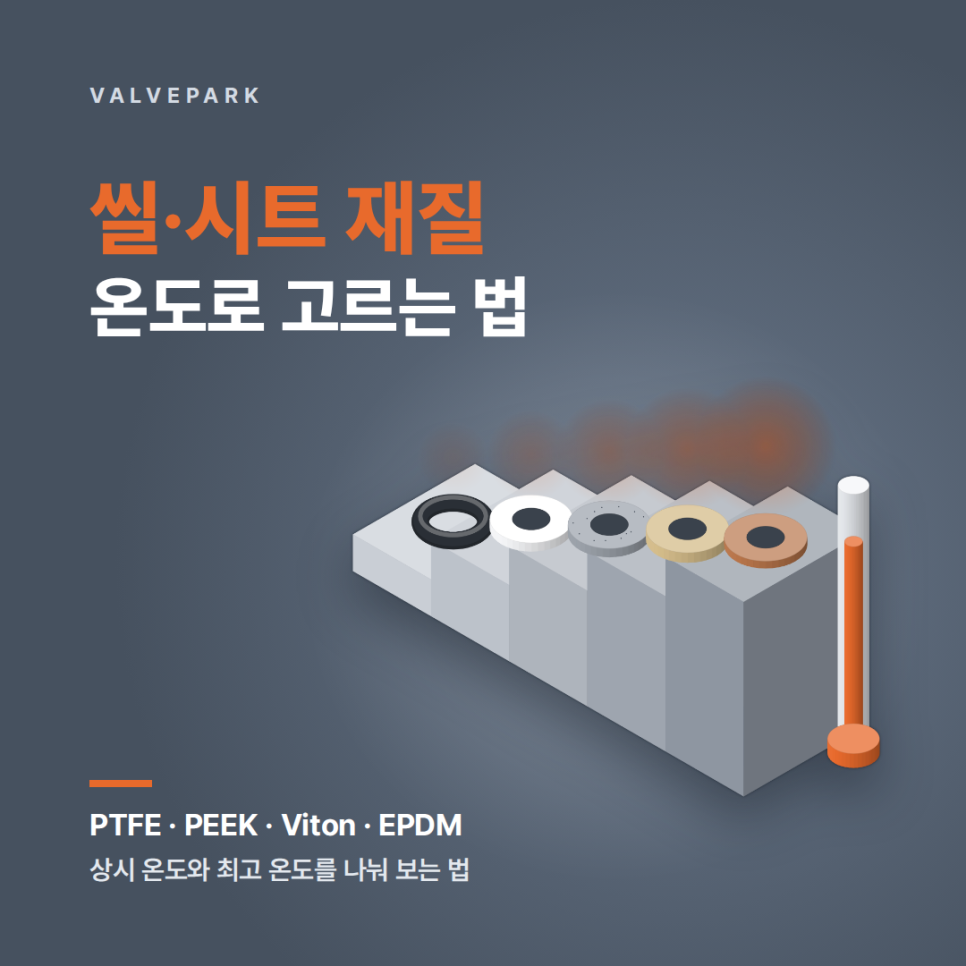
A step diagram with a rubber O-ring, PTFE, filled PTFE, PEEK and a copper gasket arranged in order of operating temperature
The general range for each material is summarized in one table. The values for PTFE, filled PTFE and PEEK are upper operating temperature limits.
| Material | General operating temperature | Typical use |
|---|---|---|
| EPDM | Around 100℃ continuous, around 120℃ peak | Water, steam and alkali lines |
| Viton (FKM) | Around 150℃ continuous, 200℃ class peak | Vacuum flange O-rings, oil and chemical lines |
| PTFE | Around 160℃ per the catalog | Seats that need chemical resistance |
| Filled PTFE | 180 to 220℃ class | Seats where PTFE gets squeezed out or the temperature is higher |
| PEEK | Around 250℃ | High-temperature, high-pressure seats |
EPDM: around 100℃ continuous, around 120℃ peak, water, steam and alkali lines
Viton (FKM): around 150℃ continuous, 200℃ class peak, vacuum flange O-rings and oil and chemical lines
PTFE: around 160℃ per the catalog, seats that need chemical resistance
Filled PTFE: 180 to 220℃ class, seats where PTFE gets squeezed out or the temperature is higher
PEEK: around 250℃, high-temperature, high-pressure seats
PTFE, filled PTFE, PEEK, one step at a time
Yes. If bakeout exceeds 200℃, the configuration moves to an all-metal design with no rubber seals.
Ultra-high vacuum piping is usually baked (heated to drive off gas stuck to the surface) at around 200℃ for about a day, and in the 300℃ class rubber seals cannot be used. For pneumatic valves with rubber seals, some configurations are baked at about 150℃ closed and 200℃ open, and temperatures above that are in metal-seal territory.
For flanges, the CF type with a copper gasket can be baked repeatedly up to 450℃. Valves are specified with different bakeout temperatures for the open and closed states, so check both values in the specification.
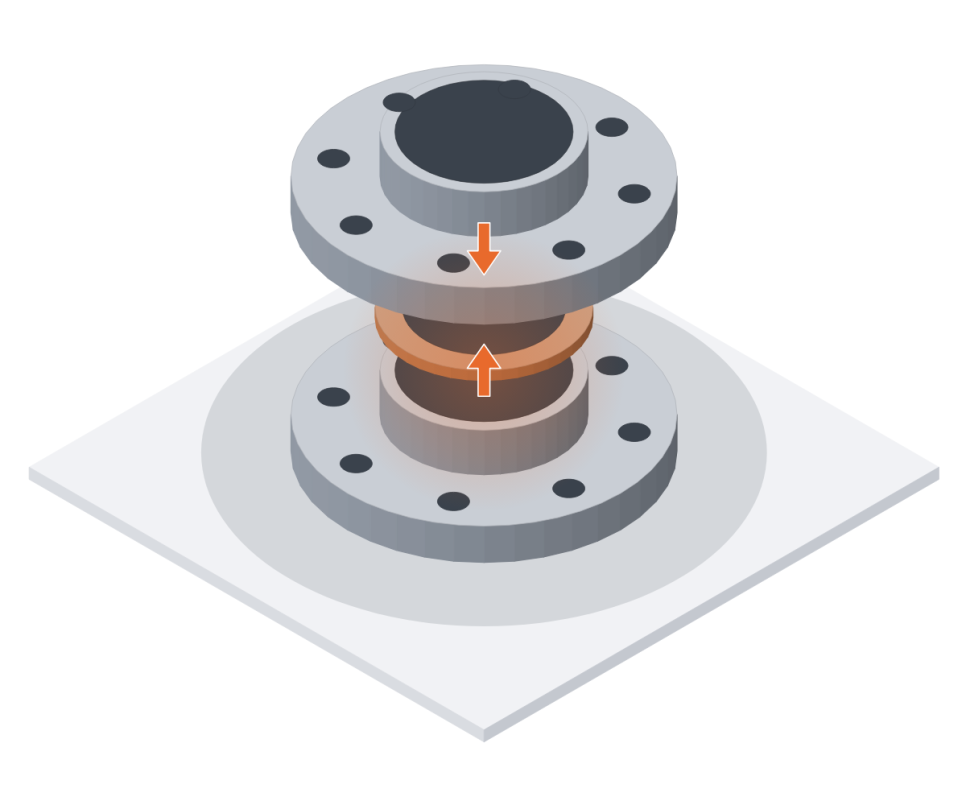
An exploded view of a metal seal with a copper gasket between the upper and lower flanges
Bakeout above 200℃ calls for metal seals
If you tell us the temperature and medium, we suggest a match including the seat and O-ring material. From rubber seals to PTFE gaskets and all-metal valves, you can inquire about the four configurations below in one place.
| Bakeout above 200℃ | HTC bakeable all-metal valve Bakeout at 400℃ open and 300℃ closed |
| Corrosive exhaust, 120℃ continuous | HTC Teflon-coated vacuum valve Internal Teflon coating, Viton poppet seal |
| Vacuum flange at 150℃ or below | Vacuum centering ring and O-ring (SUS304, VITON) Sizes from NW10 to ISO630 |
| Hygienic piping with cleaning and sterilization | Sanitary gaskets (silicone, Viton, Teflon) Material choice on the same connection |
HTC bakeable all-metal valve: lines with bakeout above 200℃
Valves containing rubber seals cannot be used for bakeout above 200℃. For this range, an all-metal valve is used, with a full stainless steel body and a bellows (corrugated tube) sealing the stem. Per the catalog, the HTC bakeable all-metal valve can be baked up to 400℃ open and 300℃ closed. The operating pressure is 1×10⁻¹⁰ mbar to 1000 mbar.
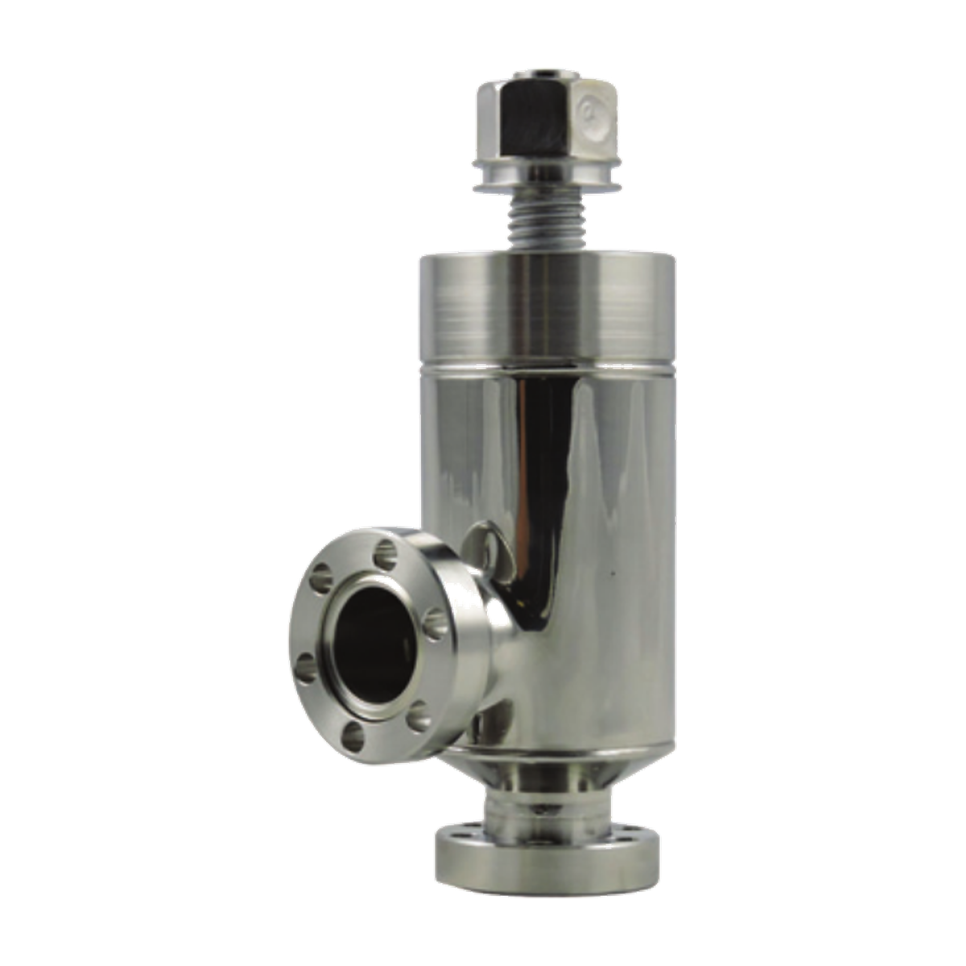
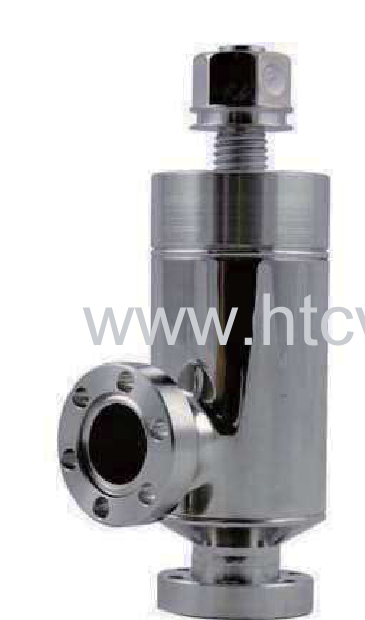
An angle-type bakeable all-metal valve showing the side flange and the top actuator section
Construction: all-stainless steel body, bellows stem seal, no mounting orientation restriction
Types and sizes: angle and straight-through, in three sizes CR16, CR35 and CR63
Leak rate: 5×10⁻¹⁰ mbar·L/s
For general vacuum piping with bakeout at 150℃ or below, a rubber-seal configuration is often suitable. In the 150 to 200℃ range, the flange seal moves up to metal, and for valves you check the open-state and closed-state bakeout temperatures in the specification.
HTC Teflon-coated vacuum valve: corrosive exhaust lines, up to 120℃ continuous
When corrosive gas flows in an exhaust line, the body surface becomes an issue along with temperature, so this valve with the inside of a 304 stainless steel body coated with Teflon is used. Per the catalog, the continuous operating temperature inside and outside the valve is up to 120℃, and it is not suited to lines above this value.
Seal: the poppet seal is Viton, and other materials and FFKM O-rings are offered by requested specification
Connection and pressure: KF and ISO flanges, operating pressure 1 atm to 1×10⁻⁷ mbar
Actuation: pneumatic 4 to 6.5 kg/cm², no mounting orientation restriction
FFKM O-rings are offered by requested specification, so they are a candidate for review under corrosive gas conditions within the 120℃ range where Viton is not suitable.
Vacuum centering ring and O-ring (SUS304, VITON): vacuum flange at 150℃ or below
Viton is widely used for the O-rings of KF and ISO vacuum flanges. For general vacuum piping at around 150℃ continuous, a set of a SUS304 centering ring and a Viton (FKM) O-ring is suitable. Sizes run from NW10 to ISO630, so you can choose to match the flange designation of existing piping.
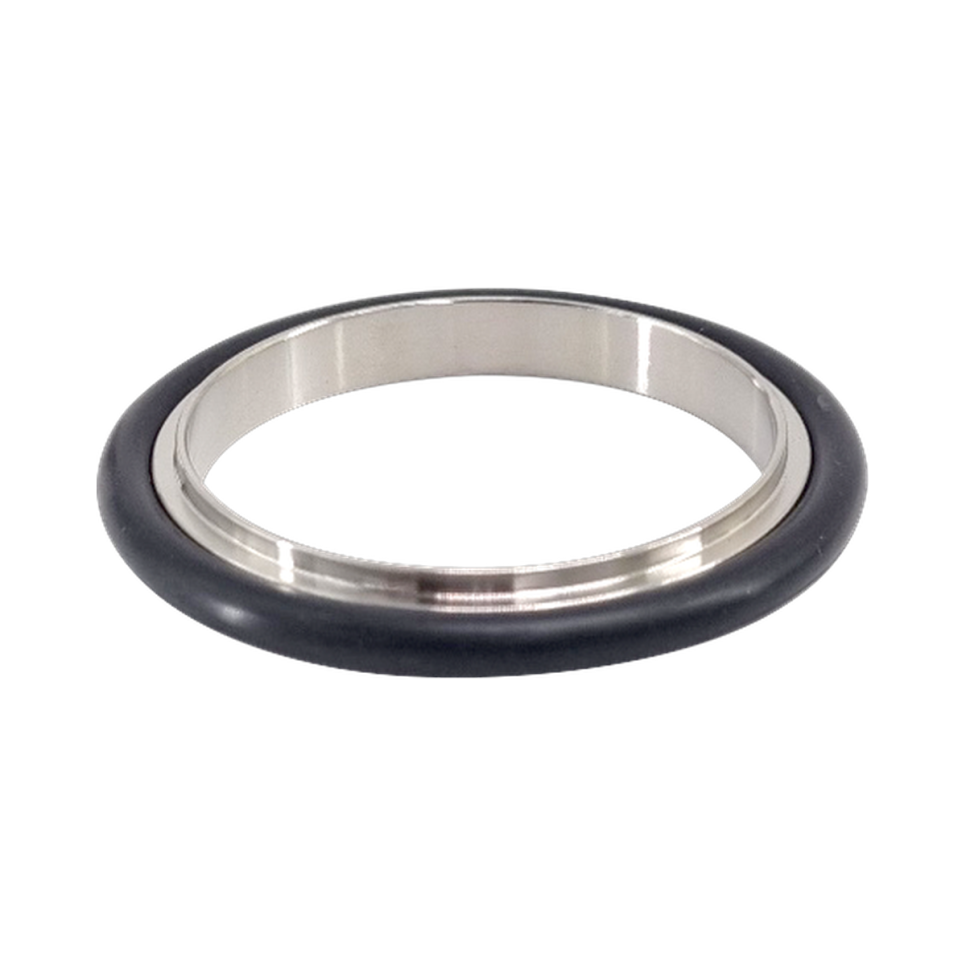
A set with a Viton O-ring fitted on a SUS304 centering ring
Material: centering ring SUS304, O-ring Viton (FKM)
Standard: KF NW10, 16, 25, 40 and 50; ISO 63 to 630
Temperature: for lines with repeated bakeout above 150℃, also review metal seals and all-metal valves
Sanitary gaskets (silicone, Viton, Teflon): hygienic piping with cleaning and sterilization
On a tri-clamp connection, only the gasket material changes within the same standard to suit the temperature and medium. Viton is used up to the 200℃ class, Teflon (PTFE) is used for high temperatures in the 200℃ range and strong solvents, and silicone is used at the general cleaning temperatures of food and pharmaceutical lines.
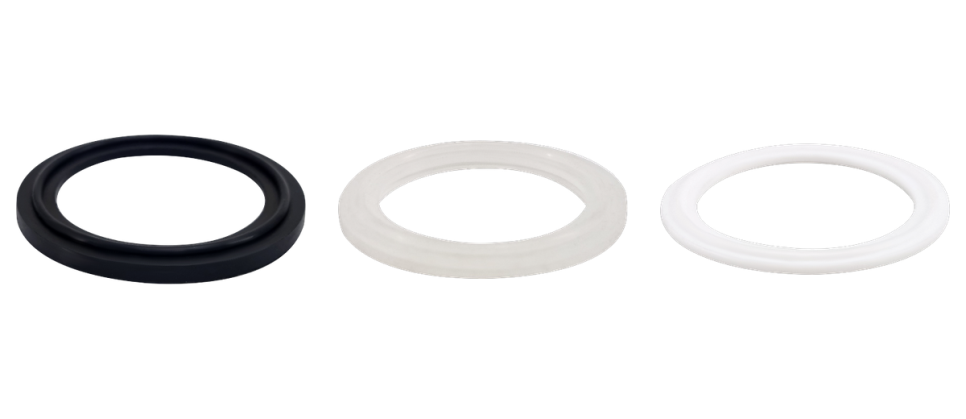
From the left: Sanitary gaskets in Viton, silicone and PTFE
Standard: Viton and silicone wing type 1s to 4s, Teflon 1/2s to 12s
Note: Teflon has weak resilience, so when thermal cycles repeat, recheck the tightening torque
Note: for lines with steam sterilization or alkaline cleaning, whether Viton is suitable depends on the grade, so we check the conditions you send
Other materials: EPDM and others are checked separately depending on the conditions
Q. Can I use a Viton O-ring as is for a 150℃ bakeout?
150℃ is the continuous limit of Viton, so it can be used if you consider the bakeout time and the number of repetitions together. Short heating at 150℃ or below is often used as is. Beyond 150℃ or with long repeated heating, the O-ring hardens in its compressed shape and the sealing force drops, so from that range review metal seals or an all-metal valve.
Q. Up to what temperature can a PTFE-seated ball valve be used, and does the allowable pressure drop as the temperature rises?
A pure PTFE seat is up to around 160℃ per the catalog, and it is safer to set the allowable pressure lower as the temperature rises. A soft seat has both a temperature limit and a pressure limit, so even for the same size the allowable range changes with the combination of conditions, and you check the two values as a pair in the specification.
Q. Can I use Viton on a steam or alkali line?
We lean toward not recommending it. Per the catalog, steam and alkali are left out of the recommended media for Viton, and EPDM is classified as the suitable material. If the steam temperature is close to the EPDM limit, review other materials as well.
Q. If only the seat material is right, can the whole valve withstand that temperature?
No. Besides the seat and O-ring, a valve has limits in its body, coating, actuator and sensors, and the lowest value becomes the limit of the whole valve. The HTC Teflon-coated vacuum valve has a Viton poppet seal, but the continuous operating temperature inside and outside the valve is stated as up to 120℃.
If you send the conditions below, we can start a specification review that includes the seat and O-ring material.
1️⃣ Temperature: continuous and peak temperature, and the time and number of times at the peak temperature
2️⃣ Bakeout: whether it is needed, the bakeout temperature, and the open and closed states
3️⃣ Medium: the type of gas or liquid, and whether steam or cleaning solutions are used
4️⃣ Pressure: operating pressure and vacuum level
5️⃣ Size and connection: size and flange standard (KF, ISO, CF, tri-clamp and so on)
6️⃣ The material currently in use, the quantity and the desired delivery date
Please contact us if you need a specification sheet or detailed materials.
▸ View product: HTC bakeable all-metal valve
▸ See also: HTC Teflon-coated vacuum valve
Purchase and Inquiries
| sales@valvepark.com | |
| Phone | 1666-0215 |
| KakaoTalk channel | KakaoTalk consultation |
| Website | Go to the VALVEPARK website |
| Smart Store | Go to the VALVEPARK Smart Store |