Conversion: 1 mbar = 100 Pa, 1 Torr ≈ 1.333 mbar ≈ 133.32 Pa
How to match: move the pressures in specifications to mbar alone and compare them side by side
Ranges: low, medium, high and ultra-high vacuum divide near 1, 10⁻³ and 10⁻⁷ in mbar, and the boundaries differ by source
What to check: the value and unit, the distinction between process pressure and ultimate pressure, and the gas used
Configurations: INFICON gauges, Ebara MK turbomolecular pump, HTC aluminum block, all-metal and APC pendulum valves
Hello, this is VALVEPARK.
1 mbar is 100 Pa, and 1 Torr is about 1.333 mbar (about 133.32 Pa). Even if the pump specification is in mbar, the gauge in Torr and the equipment in Pa, moving them all to mbar lets you compare them on one line.
The boundaries of the range names from low vacuum to ultra-high vacuum differ by source, so quotation conditions are set by the pressure value and unit, not by the range name.
mbar and Pa differ by a factor of 100 and convert directly, while for Torr you multiply or divide by 1.333 or 133.32. 1 Torr is 1/760 of 1 atm, and 1 mbar is 100 Pa.
| Conversion basis | Pa | mbar | Torr |
|---|---|---|---|
| 1 Pa | 1 | 0.01 | about 0.0075 |
| 1 mbar | 100 | 1 | about 0.75 |
| 1 Torr | about 133.32 | about 1.333 | 1 |
| 1 atm | 101,325 | 1013.25 | 760 |
mbar to Pa: multiply by 100
Pa to mbar: divide by 100
Torr to mbar: multiply by 1.333
mbar to Torr: multiply by 0.75
Torr to Pa: multiply by 133.32
For example, 0.5 Torr is about 0.67 mbar and about 67 Pa. For the bar unit, 1 bar is 1000 mbar, so about 750 Torr.
Put specification pressures in mbar alone
If you rewrite the pressures in the specifications in mbar alone, they line up on one line even when the units were mixed, and you can see whether the system fits together.
This is an example in which three specifications from the same system are moved to mbar.
| Specification item | Stated value | Value moved to mbar |
|---|---|---|
| Turbomolecular pump ultimate pressure | below 2×10⁻⁷ Pa | below 2×10⁻⁹ mbar |
| Vacuum gauge lower measurement limit | 5×10⁻¹⁰ mbar | 5×10⁻¹⁰ mbar |
| Valve specification example | 1×10⁻⁵ Torr | about 1.3×10⁻⁵ mbar |
If the pump goes down to below 2×10⁻⁹ mbar, the gauge that reads that pressure must have a lower measurement limit. The gauge in the table has a limit of 5×10⁻¹⁰ mbar, so it can read it.
If a valve specification is at the level of 1.3×10⁻⁵ mbar, it is about four orders of magnitude higher than the pressure this pump reaches. It is a good idea to confirm with the specification author whether that value is the usable pressure range.

The pump, gauge and valve attached to a chamber, and the three specification sheets for each
Units with L/s attached, such as mbar·L/s and Torr·L/s, are leak rates, not pressures, so they are not mixed into this table for conversion.
The gauge's lower limit should be lower than the ultimate pressure
They divide near 1, 10⁻³ and 10⁻⁷ in mbar, and the boundary values differ by source.
| Range | mbar | Pa | Torr |
|---|---|---|---|
| Low vacuum | 1000~1 | 10⁵~10² | 750~0.75 |
| Medium vacuum | 1~10⁻³ | 10²~10⁻¹ | 0.75~7.5×10⁻⁴ |
| High vacuum | 10⁻³~10⁻⁷ | 10⁻¹~10⁻⁵ | 7.5×10⁻⁴~7.5×10⁻⁸ |
| Ultra-high vacuum | below 10⁻⁷ | below 10⁻⁵ | below 7.5×10⁻⁸ |
Catalogs that write in Torr apply the same exponents directly to Torr. Per the catalog, medium vacuum is 1 to 10⁻³ Torr, high vacuum is 10⁻³ to 10⁻⁷ Torr, and ultra-high vacuum is below 10⁻⁷ Torr. The boundary pressures come out about 1.33 times higher than the mbar notation.
Some textbooks put the start of ultra-high vacuum at 10⁻⁸ mbar, and some tables that write in Pa count it from 10⁻⁷ Pa (about 10⁻⁹ mbar). That is why a quotation states its conditions with the pressure value and unit instead of the range name.
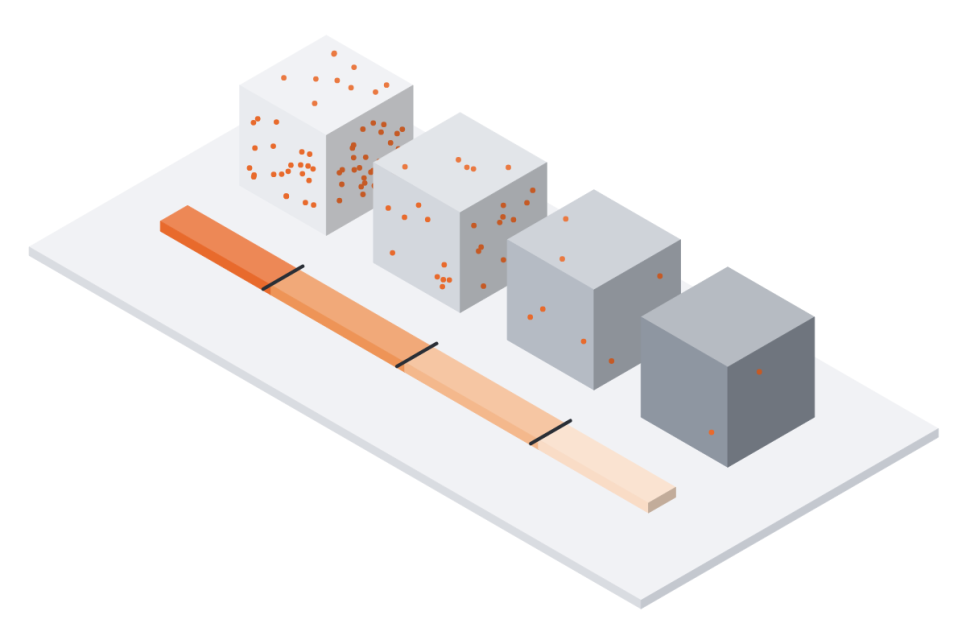
Four boxes with progressively fewer particles and a scale bar placed in front
Per the catalog, the gas flow also differs by range. Low vacuum is viscous flow, in which molecules flow while colliding with each other; medium vacuum is the transition region in between; and high and ultra-high vacuum are molecular flow, in which molecules mainly collide with the walls.
By pressure value and unit rather than range name
The gauge, pump and valve used differ by range, so the three are matched to the same range. If you tell us the target pressure and the gas used, we suggest a gauge, pump and valve combination that fits the range.
| Range | Pressure gauge | Pump | Valve and seal |
|---|---|---|---|
| Low and medium vacuum (1000~10⁻³ mbar) | Pirani, capacitance | Backing pump for roughing and foreline | Rubber O-ring seal, automatic shut-off angle valve |
| High vacuum (10⁻³~10⁻⁷ mbar) | Hot cathode, combined Pirani | Turbomolecular pump and backing pump | Valve isolated by a bellows, standard design down to around 10⁻⁷ mbar |
| Ultra-high vacuum (below 10⁻⁷ mbar) | Hot cathode | Turbomolecular pump, bakeout | All-metal valve, metal seal, CF flange |
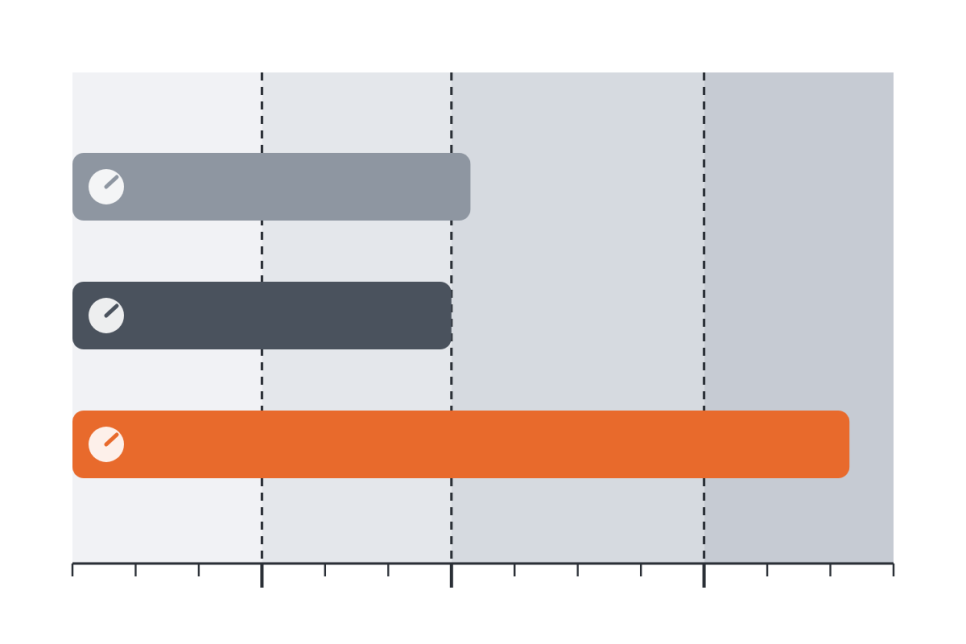
From the top, the ranges read by the PSG50x Pirani, the capacitance gauge and the BPG400 combined gauge. The dotted lines are the 1, 10⁻³ and 10⁻⁷ mbar boundaries
| One unit measuring from atmospheric pressure to ultra-high vacuum | INFICON BPG400 hot cathode and Pirani combined vacuum gauge Measurement range 5×10⁻¹⁰~1000 mbar |
| Measuring by choosing the full scale in each unit | INFICON CDG025D capacitance diaphragm vacuum gauge Models by full scale in Torr, Pa and mbar |
| High to ultra-high vacuum pumping | Ebara MK magnetic levitation turbomolecular pump Ultimate pressure below 2×10⁻⁷ Pa |
| KF small-bore automatic shut-off | HTC aluminum block angle valve Operating pressure 1×10⁻⁸ mbar~2 bar |
| Ultra-high vacuum bakeout line | HTC bakeable all-metal valve Operating pressure 1×10⁻¹⁰~1000 mbar |
| Chamber pressure control | HTC APC pendulum valve Pressure control by sensor input |
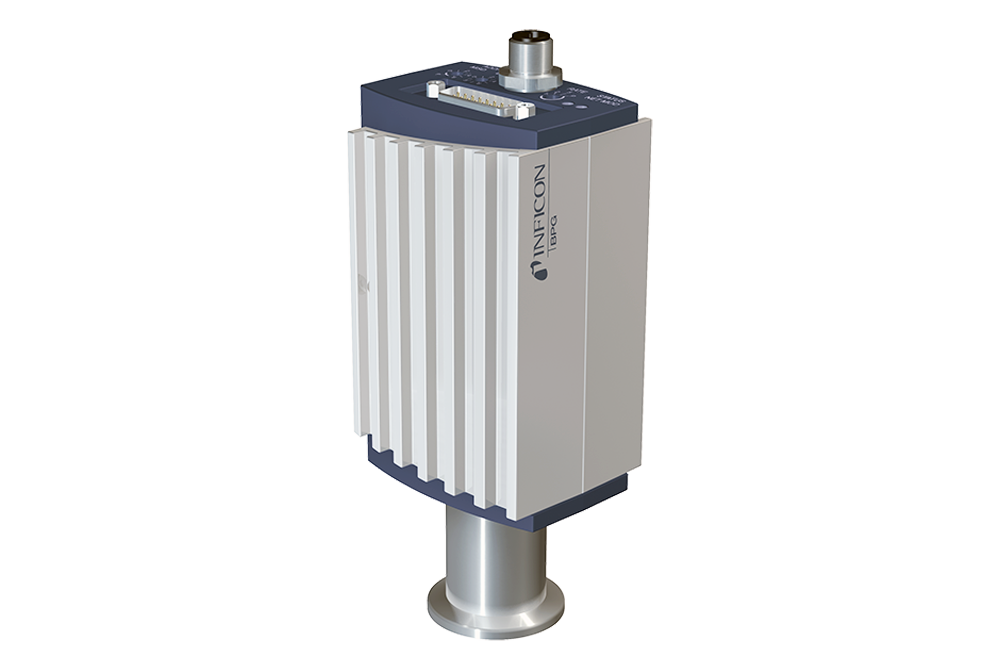
INFICON BPG400 hot cathode and Pirani combined vacuum gauge: 5×10⁻¹⁰~1000 mbar
A gauge that combines a hot cathode sensor reading high and ultra-high vacuum with a Pirani sensor reading the atmospheric side. Its specified measurement range is 5×10⁻¹⁰~1000 mbar and it is also stated as 3.8×10⁻¹⁰~750 Torr, which makes it easy to line up against specifications written in Torr.
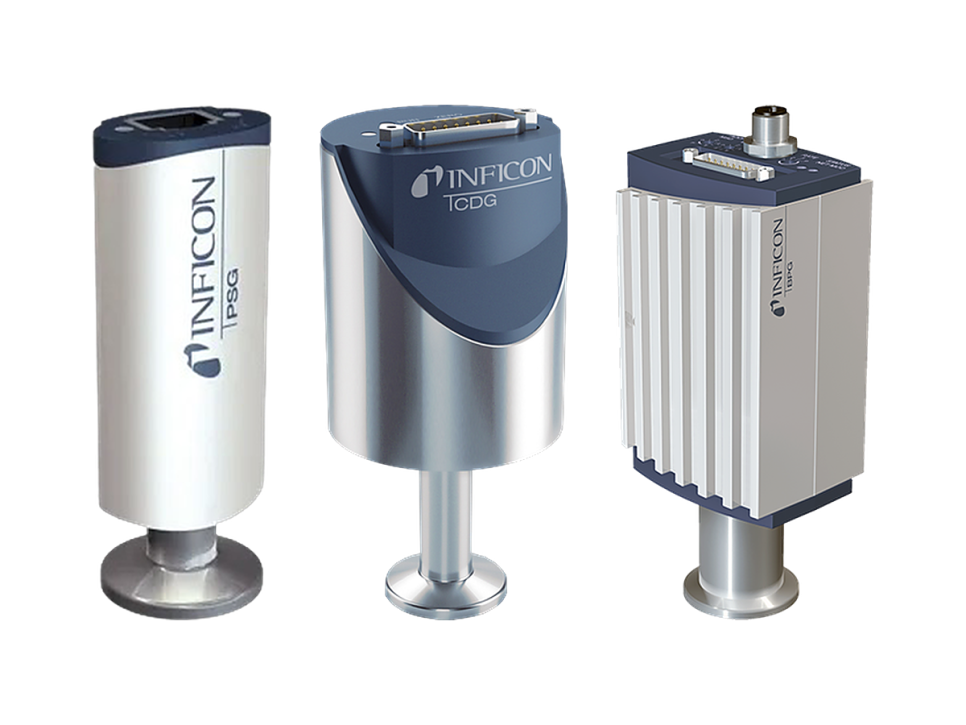
INFICON PSG50x, CDG025D and BPG400 vacuum gauges
Accuracy: ±15% of the reading in the 10⁻⁸~10⁻² mbar range
Maximum pressure and protection: maximum 2 bar, protection rating IP30
Lines that read only low and medium vacuum: the same INFICON's PSG50x Pirani gauge reads 5×10⁻⁴~1000 mbar, with an accuracy of ±15% of the reading in the 1×10⁻³~100 mbar range
INFICON CDG025D capacitance diaphragm vacuum gauge: a model whose full scale is chosen by unit
Full scale is the maximum pressure the gauge reads and is fixed for each model. The order table has separate full scales by unit of Torr, Pa and mbar, so 100 Torr (about 133 mbar) and 100 mbar are different models.
Standard full scales: 1000, 100, 10, 1, 0.1 Torr
Accuracy: for models with a full scale of 0.5 or higher in Torr or mbar notation, 0.2% of the reading; for the 0.25 model, 0.25%; for the 0.1 model, 0.5%
Ebara MK magnetic levitation turbomolecular pump: ultimate pressure below 2×10⁻⁷ Pa
A turbomolecular pump that levitates its rotor magnetically, used for high and ultra-high vacuum pumping. The ultimate pressure is below 2×10⁻⁷ Pa (below 2×10⁻⁹ mbar), and the EMT3804MK and EMT4204MK are below 5×10⁻⁷ Pa.
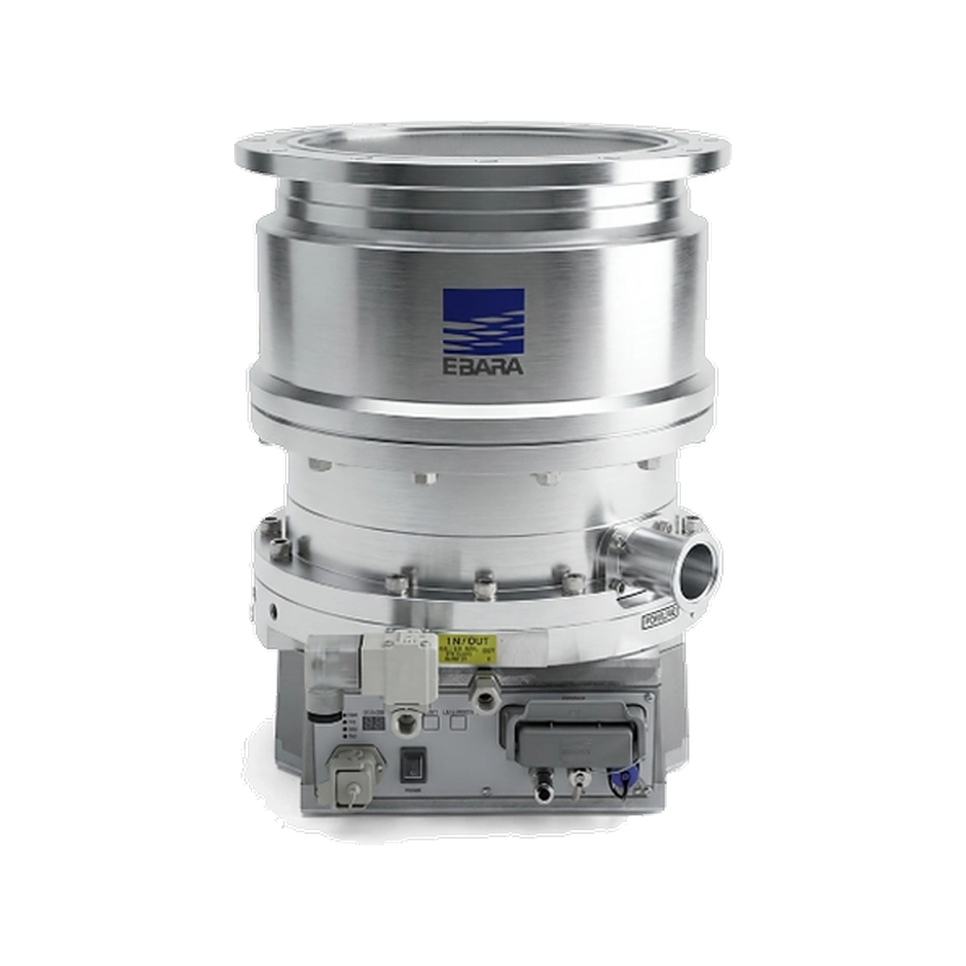
An Ebara MK turbomolecular pump showing the inlet flange on top, the side exhaust port and the controller below
Pumping speed (N₂): 1650~4200 L/s, by model
Allowable backing pump pressure: 100~110 Pa, about 1~1.1 mbar (by model)
Rated rotational speed: 24000~27000 min⁻¹
Datasheet notation: states Pa and Torr together, so it can be matched directly with specifications in either unit
HTC aluminum block angle valve: operating pressure 1×10⁻⁸ mbar~2 bar
An angle valve that automatically shuts off KF small-bore piping pneumatically. The operating pressure starts at 1×10⁻⁸ mbar, so it covers the high vacuum range, and per the catalog the leak rate is 1×10⁻⁹ mbar·L/s.
Connection and actuation: KF16, KF25 and KF40, pneumatic 4~6 kg/cm²
Composition: 316Ti stainless steel bellows, Viton seal
Bakeout: up to 80℃ for the aluminum body
HTC bakeable all-metal valve: operating pressure 1×10⁻¹⁰~1000 mbar
An all-stainless steel valve used in bakeout (heating to drive off gas) of ultra-high vacuum piping. Per the catalog, the leak rate is 5×10⁻¹⁰ mbar·L/s and it can be baked up to 400℃ open and 300℃ closed.
Construction: all-stainless steel, bellows stem seal
Connection: CR16·CR35·CR63
HTC APC pendulum valve: controls chamber pressure from sensor input
A valve installed between the process chamber and the turbomolecular pump that handles chamber pressure control and shut-off together. It has ISO200, 250 and 320 flanges, and the operating pressure of the aluminum body is 1×10⁻⁸ mbar~1.2 bar.
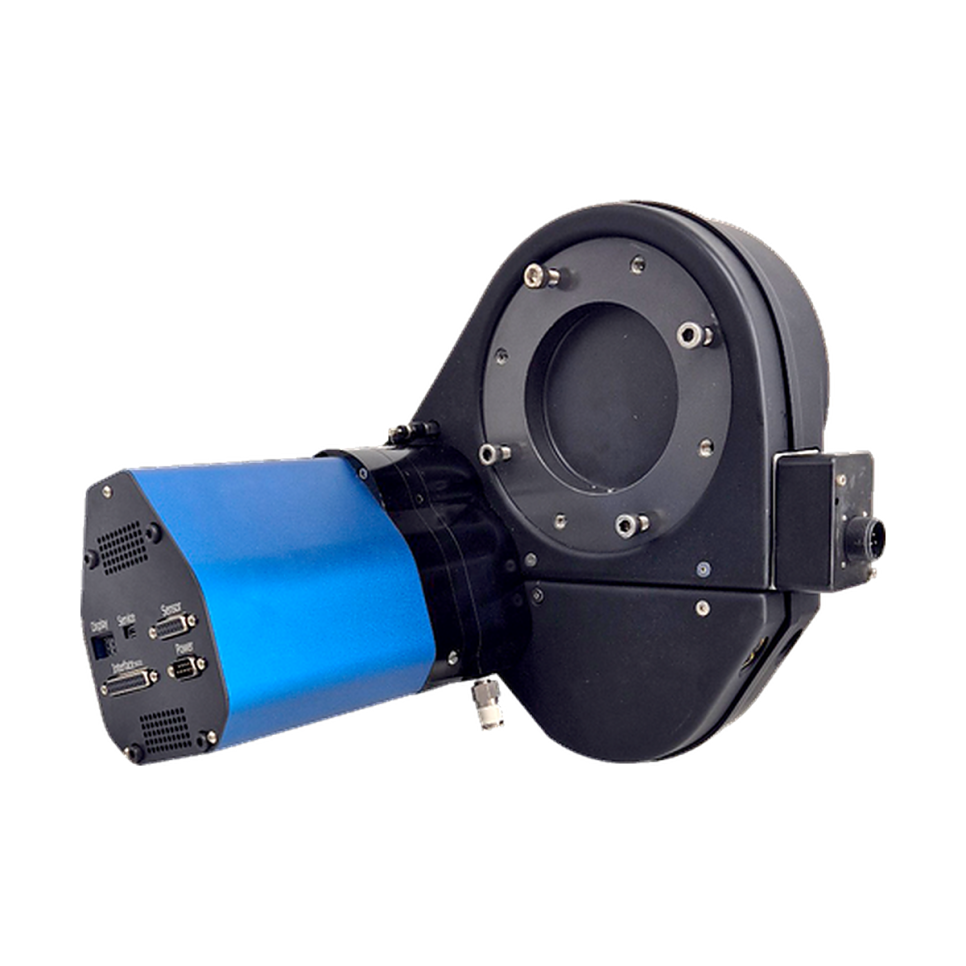
An HTC APC pendulum valve with a round black body and a blue controller attached
Sensor input: 0~10 V, 2 channels
Control accuracy: 0.1% of the sensor's maximum range
Difference by connected gauge: if a gauge with a full scale of 1 Torr is connected, 0.1% is 0.001 Torr (about 1.3×10⁻³ mbar)
Match the combination together to the target pressure
Q. Can mbar and Torr be treated as the same value?
1 Torr is 1.333 mbar, so the values differ by about 33%. When you look only at the order of magnitude you can treat them as the same, but when comparing target pressure and gauge error, look at the converted value.
Q. How do I tell whether the pressure in a specification is ultimate pressure or process pressure?
Ultimate pressure is the lowest pressure obtainable in the vessel, and process pressure is the pressure maintained while gas is flowing. When gas flows, the pressure rises to where the amount the pump removes balances the amount coming in, so the two values are not the same.
Q. Why do different gauges read different values at the same pressure?
A Pirani gauge reads a different value depending on the gas type and is calibrated to nitrogen or air. Each gauge also states its accuracy differently, so the difference may be within the error range, such as the ±15% of the BPG400.
Q. How do I convert if the specification is written in kPa or mmHg?
1 kPa is 1000 Pa, so it is 10 mbar. 1 mmHg is treated as the same value as 1 Torr, and for psi, 1 psi is about 68.95 mbar (about 51.7 Torr).
If you tell us the target pressure (with unit), the gas used and the chamber volume, we can start a specification review.
1️⃣ Target pressure and unit: distinguish process pressure from ultimate pressure, exactly as written in the specification
2️⃣ Gas used and chamber volume (L)
3️⃣ Parts needed: which of gauge, pump and valve
4️⃣ Connection standard and size: KF, ISO, CF, CR
5️⃣ Bakeout temperature: if any, distinguish the open and closed states
6️⃣ Quantity and desired delivery date
Please contact us if you need a specification sheet or detailed materials.
▸ View product: INFICON BPG400 hot cathode and Pirani combined vacuum gauge
▸ See also: Ebara MK magnetic levitation turbomolecular pump
Purchase and Inquiries
| sales@valvepark.com | |
| Phone | 1666-0215 |
| KakaoTalk channel | KakaoTalk consultation |
| Website | Go to the VALVEPARK website |
| Smart Store | Go to the VALVEPARK Smart Store |