| At a Glance | |
|---|---|
| Product line | ELECTORK pneumatic actuator line |
| Feature | For secondary battery equipment, with parts containing copper (Cu) and zinc (Zn) removed |
| Types | Rack & pinion and scotch yoke / double-acting and single-acting (spring return) |
| Mounting | ISO 5211 mounting pad, NAMUR port |
| Inquiries | Contact us and we will send you the lineup and spec sheet |
Hello, this is VALVEPARK.
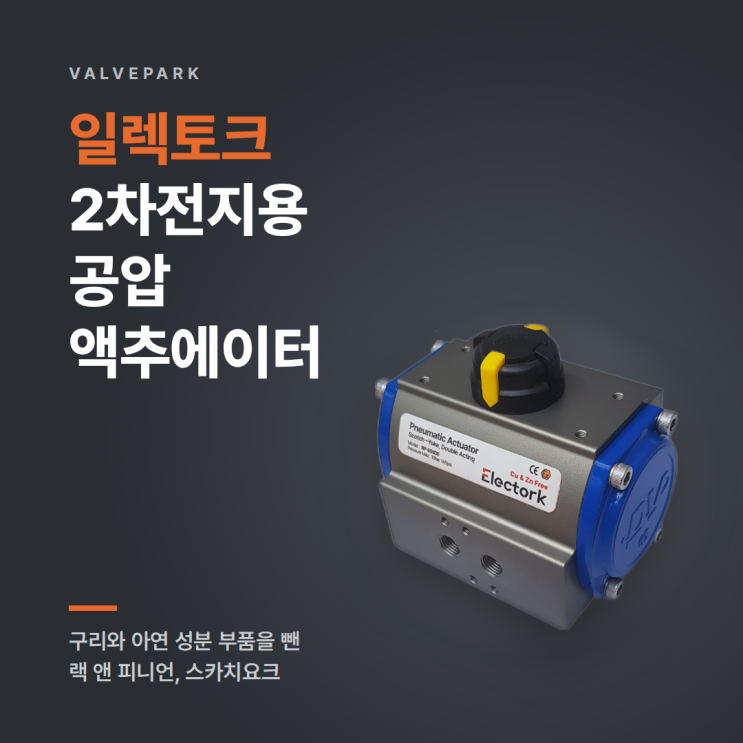
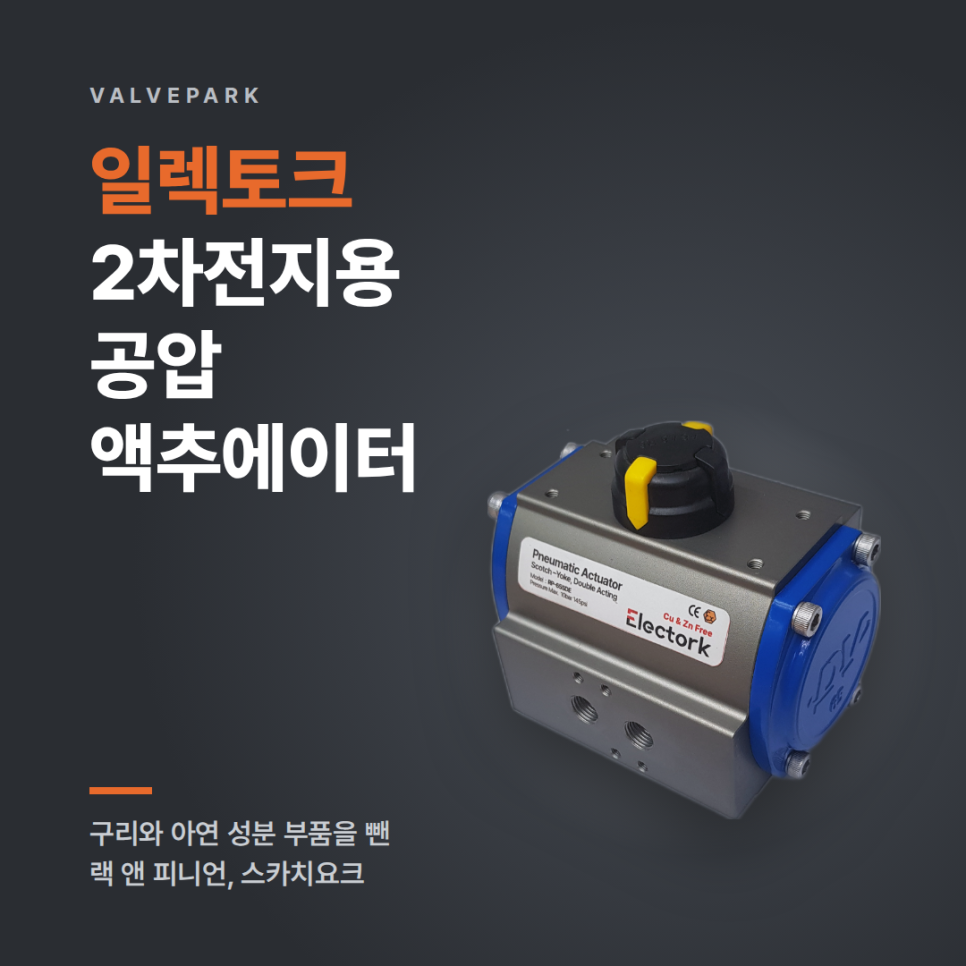
Today's product is the ELECTORK pneumatic actuator line. These actuators automatically open and close the ball valves and butterfly valves in secondary battery equipment. Their biggest feature is that parts containing copper and zinc have been removed.
This product line was made after several secondary battery manufacturers asked us to remove copper and zinc materials. In secondary battery processes, metal contaminants can lead to defects. ELECTORK uses no parts containing copper or zinc, so those particles are not released.
| Secondary battery sites asked us many times to remove copper and zinc, and ELECTORK is our answer. |
An actuator is a drive unit that turns the valve handle for you. ELECTORK uses compressed air to turn a valve 90 degrees. It is mainly used on valves in the vacuum-forming step and in the step where electrolyte is filled into battery cells.
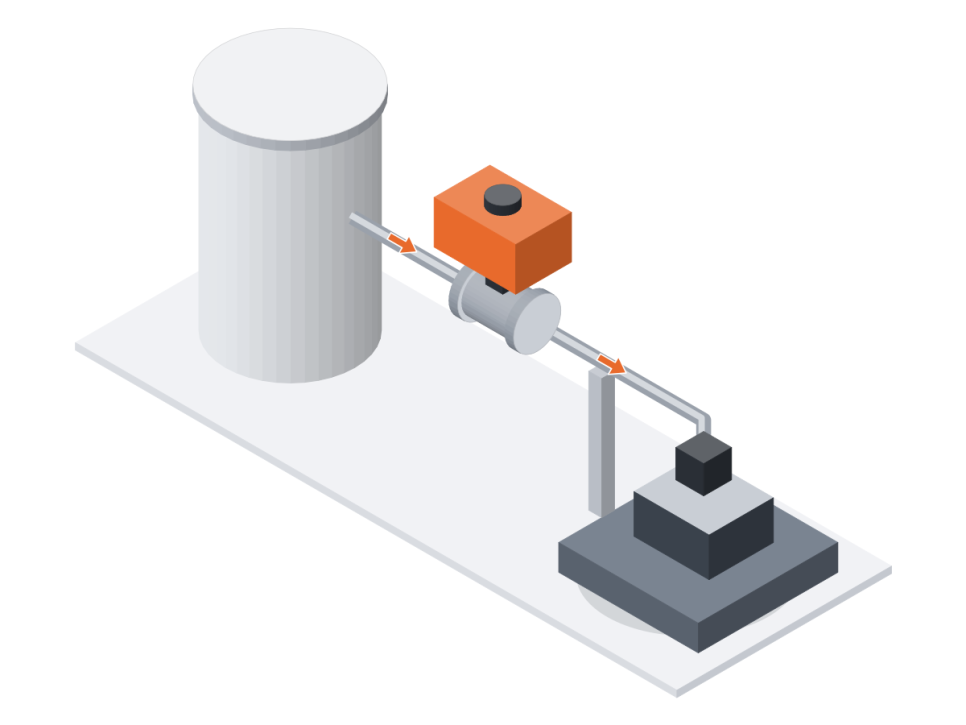
A pneumatic actuator mounted on a valve in the piping from the electrolyte tank to the injection nozzle
| VALVEPARK Recommended Configuration | |
|---|---|
| Drive | ELECTORK pneumatic actuator For secondary battery equipment, without copper and zinc |
| On-off valve | Ball valve or butterfly valve Automatic ON-OFF opening and closing |
| Vacuum line | Vacuum angle valve Clean, oil-free, every unit helium leak tested |
In the vacuum-forming step, it can be configured together with a vacuum angle valve. Since this valve also uses a pneumatic actuator, it fits well on the same line as ELECTORK.
PART 01
| You can check the "Cu & Zn Free" mark on the body label. |
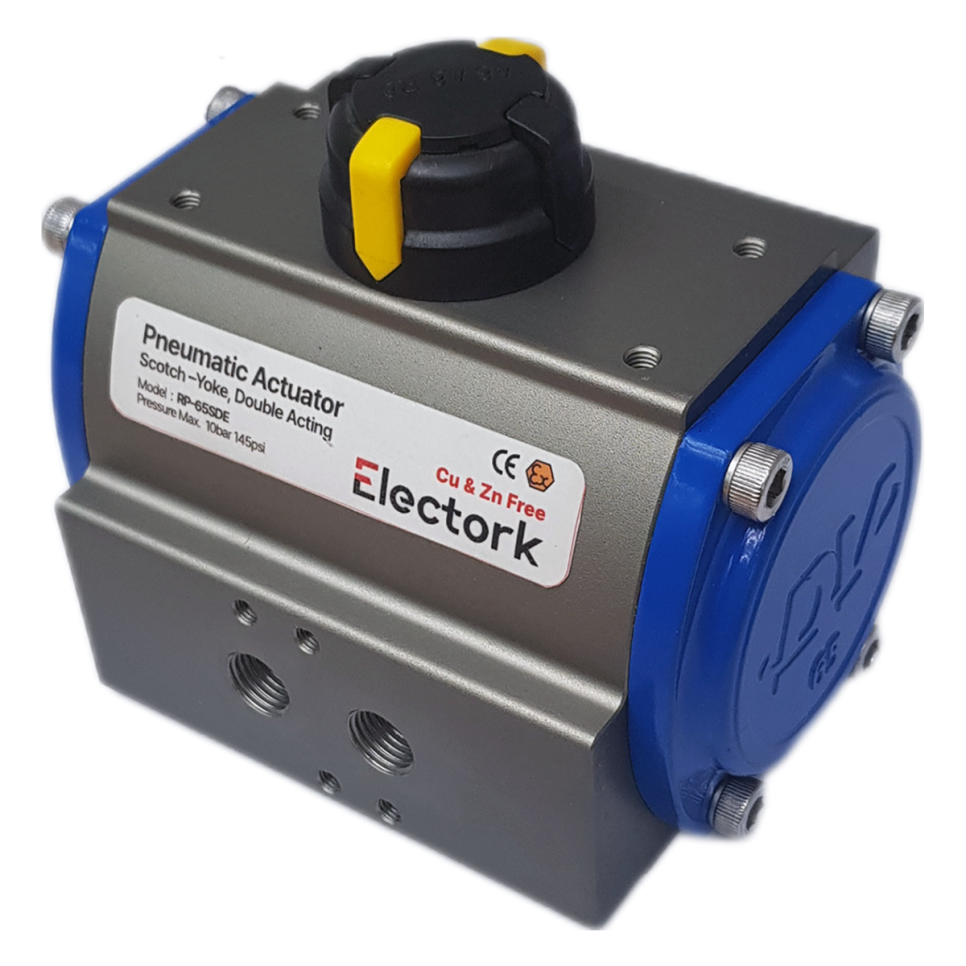
ELECTORK example model RP-65SDE. The gray body label carries the Cu & Zn Free mark
Thanks to the label, you can tell it apart from a standard actuator on site right away. If you need to know which parts were changed to which materials, please contact us. If your equipment specification has material requirements, please send it along. We will check the fit first.
PART 02
| Tell us the valve size and operating pressure, and we will choose a size with a margin over the required torque. |
Actuator size is determined by the force (torque) needed to turn the valve. Even for the same valve, the required torque changes with pressure, fluid, and temperature, so a margin is added. Valve manufacturer materials include examples of how to add a margin: add 20% to the calculated torque, or multiply by 1.3 for steam and by 1.4 for fluids containing particles. ELECTORK does not have a dedicated catalog yet. We send the torque table and lineup as a spec sheet.
The rotation method is also chosen at the same time. A pneumatic actuator turns the valve by converting the piston's straight-line motion into rotation. ELECTORK has two ways of doing this.
Rack & pinion: A toothed bar (rack) attached to the piston turns a gear (pinion) in the middle. It is good for compact designs, but there is a limit to the sizes that can be made.
Scotch yoke: The piston rod pushes a slotted lever (yoke) to turn it. The force at the start and end of rotation is greater than in the middle (about 2 times in theory), which suits opening and closing ball valves and butterfly valves. Large sizes can also be made.
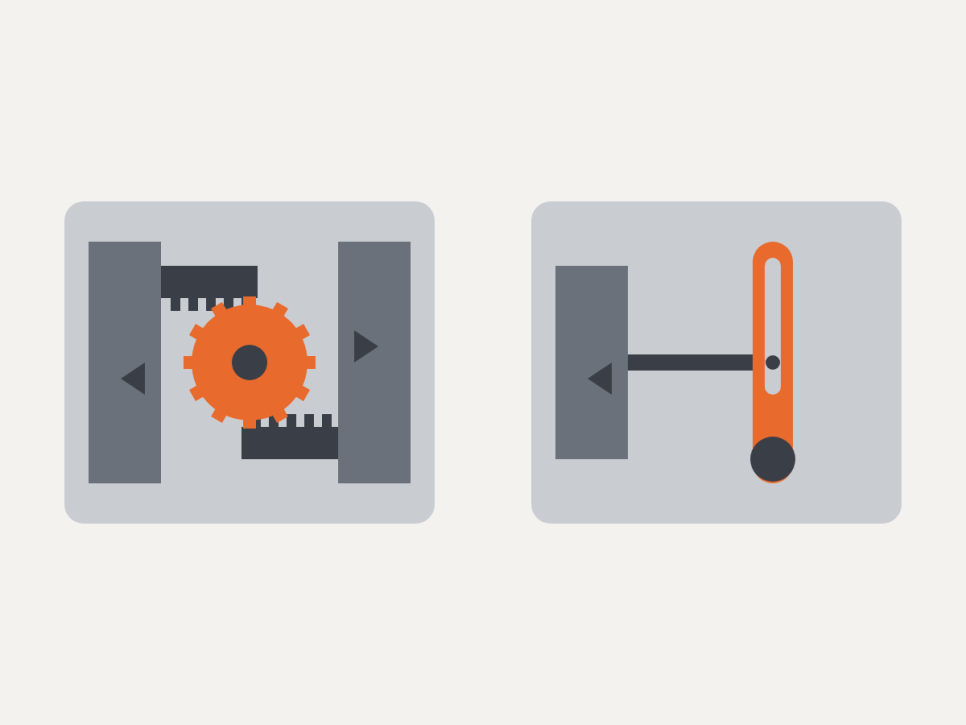
Left: a toothed bar turning a gear. Right: a rod turning a slotted lever
PART 03
| A single-acting (spring return) actuator is returned by its spring to a preset position, while a double-acting actuator has no position to return to. |
Single-acting (spring return): Air moves it on one side only, and the spring inside returns it on the other side. When the air is cut, it returns to a preset position, either open or closed.
Double-acting: Air is supplied for both opening and closing. There is no return spring, so it does not return to a preset position when the air is cut. If the position at the moment of loss must be held, a separate position-holding setup may be needed.
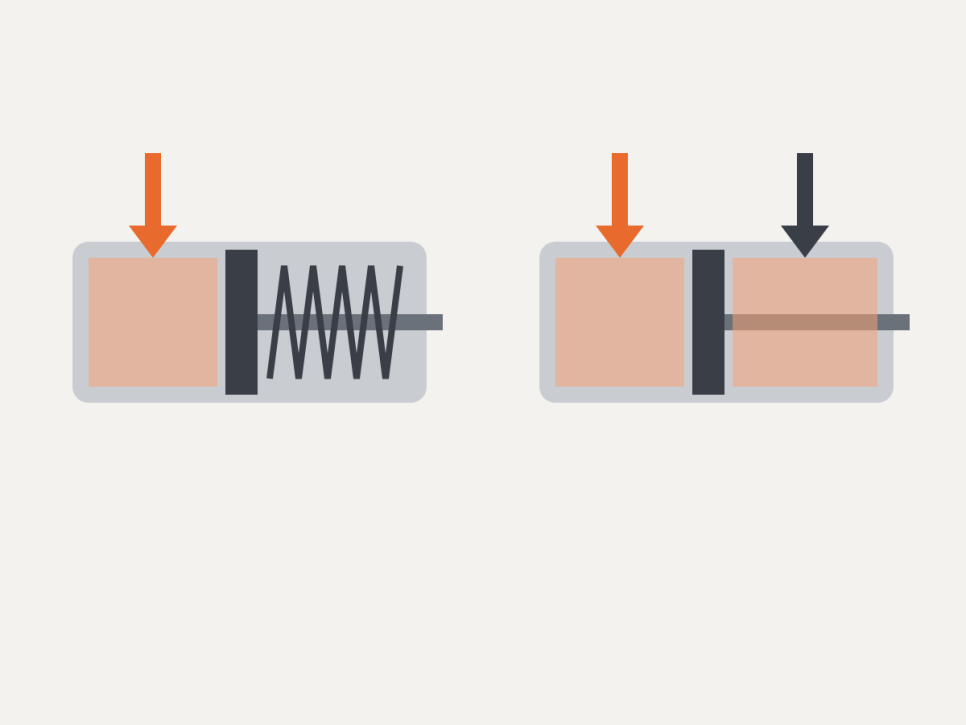
Left: air enters one side only and a spring returns it. Right: air enters both sides
For a line where the valve must be closed during a power outage or air supply interruption, we recommend considering single-acting first. ELECTORK is available in both types.
PART 04
| If the mounting pad follows the same ISO 5211 standard and the shaft size matches, you can swap it in. |
ISO 5211: An international standard that sets the mounting pad and drive shaft dimensions for attaching actuators that turn one revolution or less, such as 90 degrees, to a valve. Depending on the model, ELECTORK supports several mounting pads such as F03, F05, and F07.
NAMUR: A port standard for attaching pneumatic components such as solenoid valves directly. The name comes from a German standardization association for measurement and control.
Length: According to DOW Valve materials, the body is shorter than competing products of the same torque. This is an advantage when space inside the equipment is tight.
Before swapping, you need to check that the mounting pad size and the valve stem shape match. Even with the same mounting pad, stems come in various shapes and sizes, such as keyway, square, and flat-head types. Send us the model name or a photo of the actuator you use now, and we will check the fit first.
PART 05
| We supply limit switches together with the actuator. A solenoid valve can be attached directly to the NAMUR port. |
The options you can choose for ELECTORK are as follows.
Manual handwheel: Lets you turn the valve by hand.
Magnetic sensor: Used to check the open and closed position of the valve.
Indicator: Shows from the outside whether the valve is open or closed.
Limit switch: Reports by electrical signal whether the valve is open or closed.
Epoxy coating: Adds an epoxy coating to the body surface.
ATEX and SIL: Tailored for lines in explosive hazard zones or those requiring a safety rating. ATEX is the European explosion protection standard, and SIL is a reliability rating for safety functions.
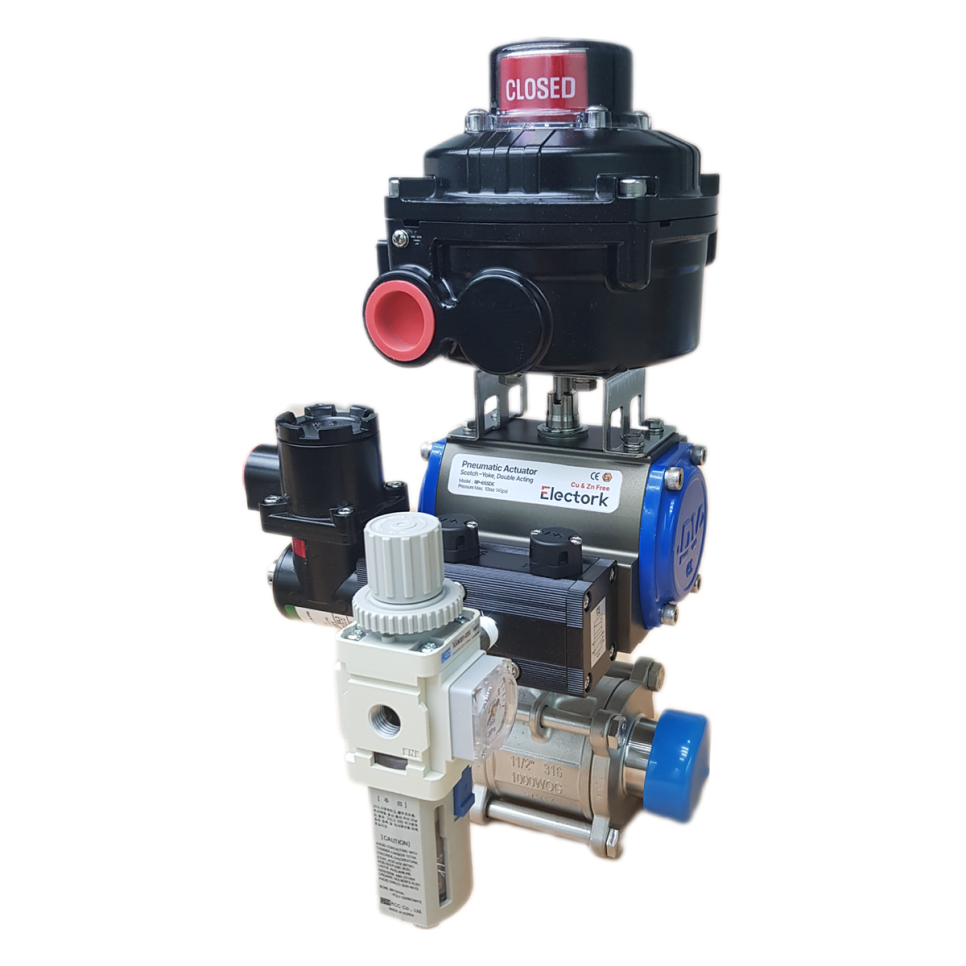
A set with ELECTORK, a position indicator, and air components mounted on a ball valve
PART 06
| Tell us the valve type and size, operating pressure, actuation type, and any options you need. |
1 Valve type and size: Tell us whether it is a ball valve or butterfly valve, and what size it is.
2 Mounting pad: Tell us the ISO 5211 mounting pad standard of the valve you use.
3 Supply pressure: Tell us the air pressure at your site. The example model RP-65SDE is used up to a maximum of 10 bar (145 psi). It is not suitable for lines above that.
4 Actuation type: Tell us whether it is double-acting or single-acting, and for single-acting, whether it should go open or closed when the air is cut.
5 Options: Tell us which you need among handwheel, magnetic sensor, limit switch, coating, and certification.
We also send the operating temperature range and material details in the spec sheet. We recommend choosing a model after checking the spec sheet.
▸ View product: ELECTORK pneumatic actuators for secondary batteries
| Purchase and Inquiries VALVEPARK Official Contact | |
|---|---|
| sales@valvepark.com | |
| Phone | 1666-0215 |
| KakaoTalk channel | https://pf.kakao.com/_lxftVxj |
| Buying piping materials becomes the easiest and fastest task. | |
| You can find product details and purchase options at the links below. | |
| Website | https://www.valvepark.com/?utm_source=naver_blog&utm_medium=blog&utm_campaign=electork-pneumatic-actuator |
| Smart Store | https://smartstore.naver.com/valvepark?nt_source=naver_blog&nt_medium=blog&nt_detail=electork-pneumatic-actuator |