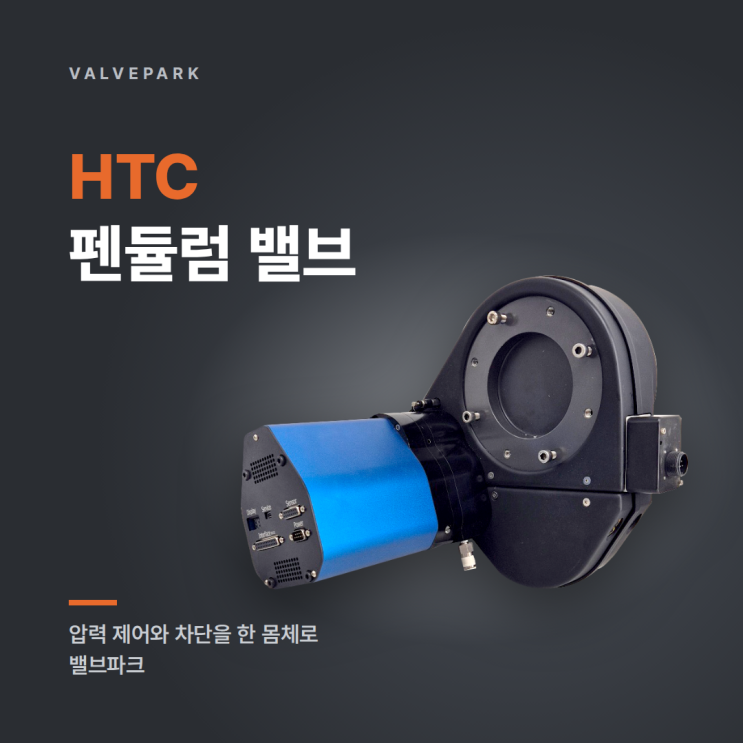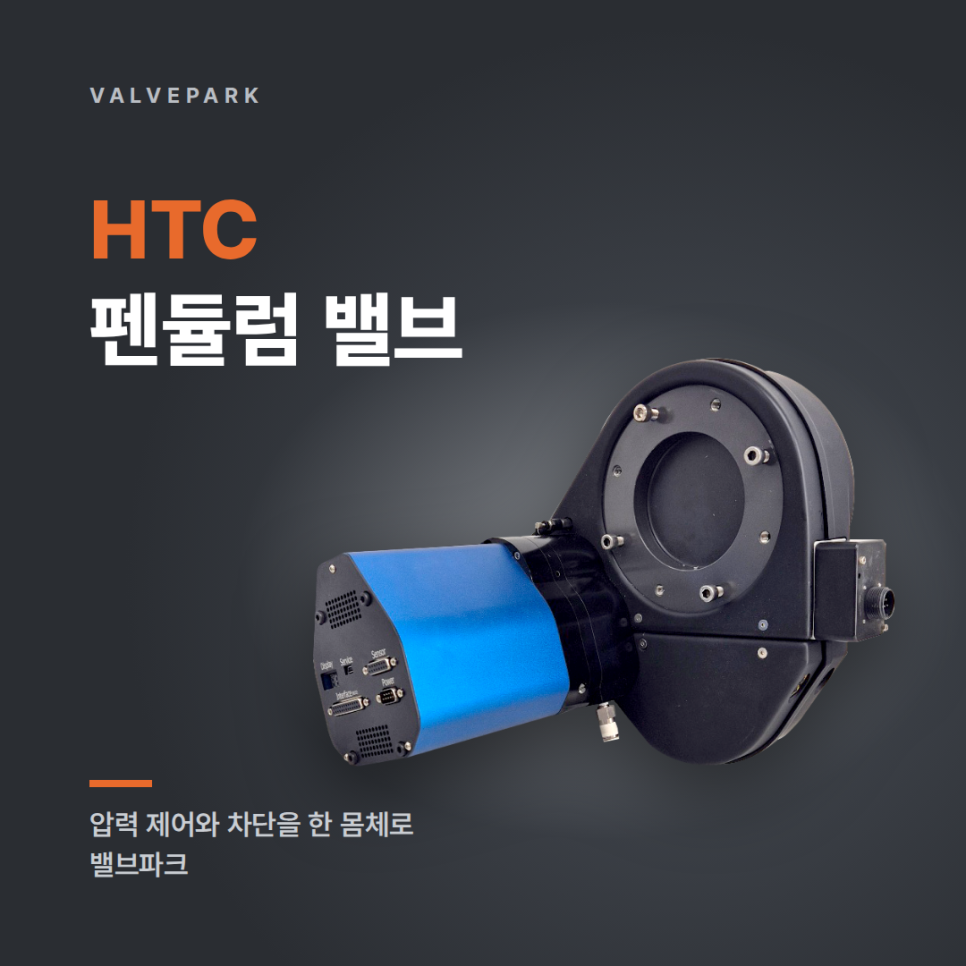
Product: HTC (Highlight Tech Corp., Taiwan) pendulum valve, APC type
Installed position: between the process chamber and the turbomolecular pump, for both pressure control and full isolation
Processes: etch, CVD and other semiconductor, display and solar cell manufacturing equipment
Sizes and control: ISO-F 200, 250 and 320, stepper motor drive, RS232 (RS485 optional)
Types: APC type, 3-position, pneumatic (double-acting and single-acting)
Hello, this is VALVEPARK.
The HTC pendulum valve APC type is a large vacuum valve that sits between an etch or deposition process chamber and the turbomolecular pump (the high vacuum pump) and handles both chamber pressure control and full isolation.
It comes in ISO-F 200, 250 and 320, and runs in pressure control mode or position control mode with a stepper motor and a dedicated controller.
A pendulum valve leaves the gas flow into the chamber as it is and sets the pressure on the exhaust side.
Etch and CVD (chemical vapor deposition) are stable only when the pressure stays near a set value, and ALD (atomic layer deposition) has to bring the pressure back to target at every step where the gas is switched. That is why all of them place a pressure control valve between the chamber and the pump.
HTC lists semiconductor, display (OLED, FPD) and solar cell manufacturing equipment as the fields of application.
There are four situations in which a pendulum valve is selected.
1️⃣ When gas flow and chamber pressure have to be set separately: it is used for processes in which the right gas flow and the right pressure do not come out of the same condition.
2️⃣ When the chamber has to be opened with the pump running: closing the valve fully separates the chamber from the pump, so the chamber can be vented to atmosphere for maintenance without stopping the pump.
3️⃣ When a large exhaust path is needed: when fully open, the plate moves out of the path, which reduces the loss of pumping speed even on large ports from 8 inches to 12 inches.
4️⃣ Processes with heavy by-products or corrosive gases: select the heater option, which heats the valve so that by-products do not condense inside it, and the hard-anodized body, which has a hardened surface.
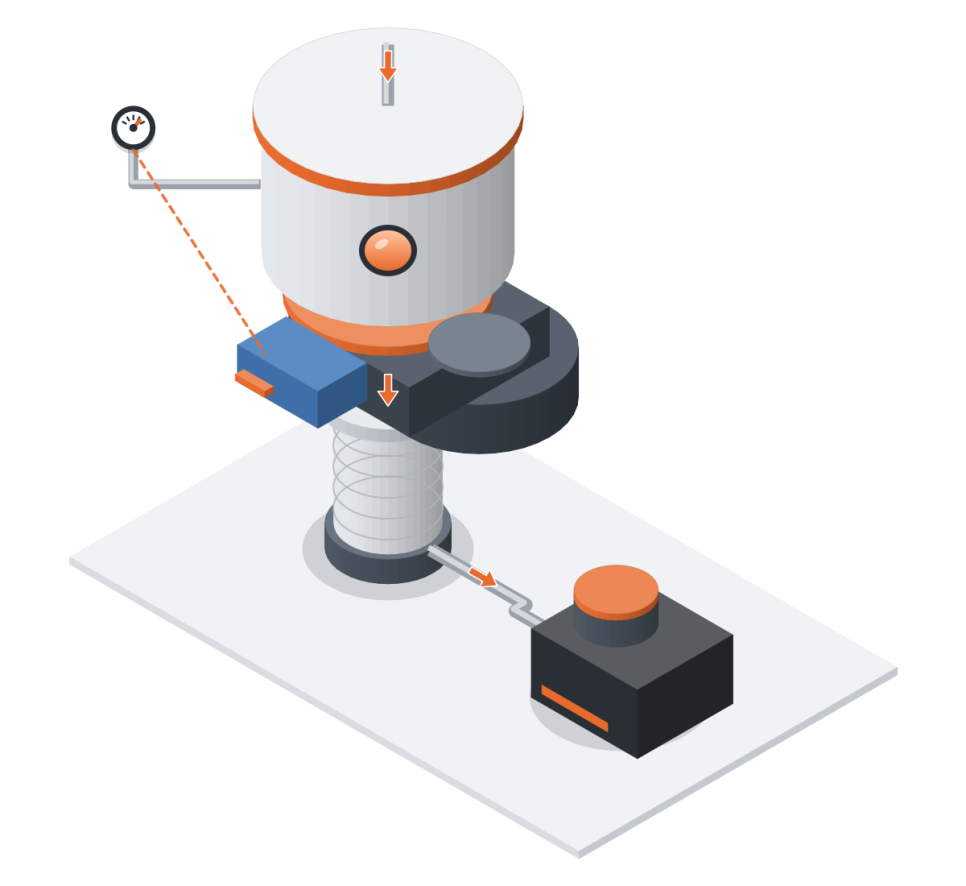
From the top: the process chamber where the gas enters, the pendulum valve with its controller and pressure gauge signal line, the turbomolecular pump, and the dry pump
For etch and CVD equipment, pressure control ahead of the pump
The difference between a gate valve (for isolation) and a throttle valve (for pressure adjustment), and the basics of automatic pressure control (APC), were covered in Part 2 of our vacuum series. A pendulum valve is the design in which a single valve takes on both roles.
▸ Read also: Gate Valve vs. Throttle Valve: Controlling Chamber Pressure (Semiconductor Vacuum Systems Part 2)
A typical pendulum valve works in two stages. First, a round plate (the gate) hangs from an arm and swings on an arc like a pendulum until it is in front of the exhaust path. Once it is squarely in front of the opening, the usual method is to press the plate toward the seat (the sealing face) and seal it with an O-ring.
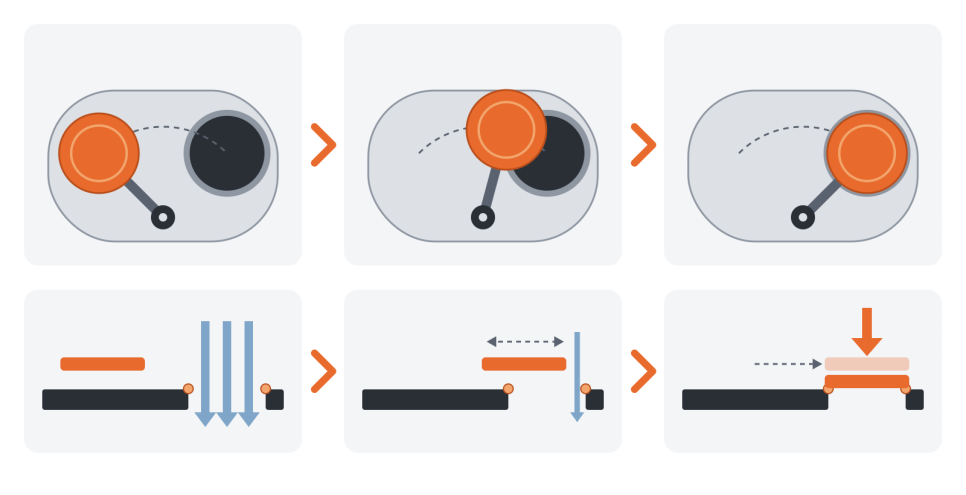
The upper row shows the plate position seen from above and the lower row is a conceptual side section; from the left: open, pressure control, closed
1️⃣ Open: the plate is completely clear of the opening, so the path is not blocked.
2️⃣ Pressure control: without touching the seat, the plate moves little by little along the arc and changes how much of the opening it covers, and the pumping speed changes accordingly.
3️⃣ Closed: the plate is pressed onto the seat squarely in front of the opening and fully shuts off the chamber from the pump.
HTC names low vibration, low particle generation and easy disassembly as features of this valve. The pendulum design is known to leave few paths for gas to travel along the shaft to the vacuum side, because the shaft only rotates.
In the APC type, the controller reads the pressure gauge signal and the stepper motor moves the plate. If the valve has to open further and further to hold the same pressure at the same gas flow, that can be read as a sign that pump performance is falling.
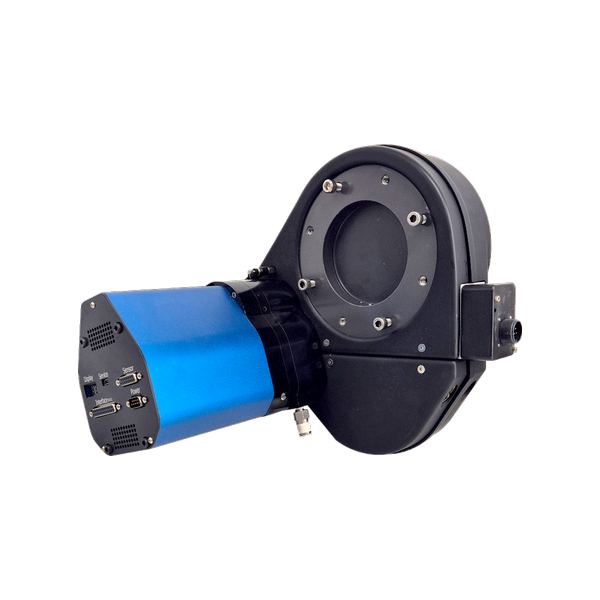
The APC type has a dedicated controller mounted on the side of the valve.
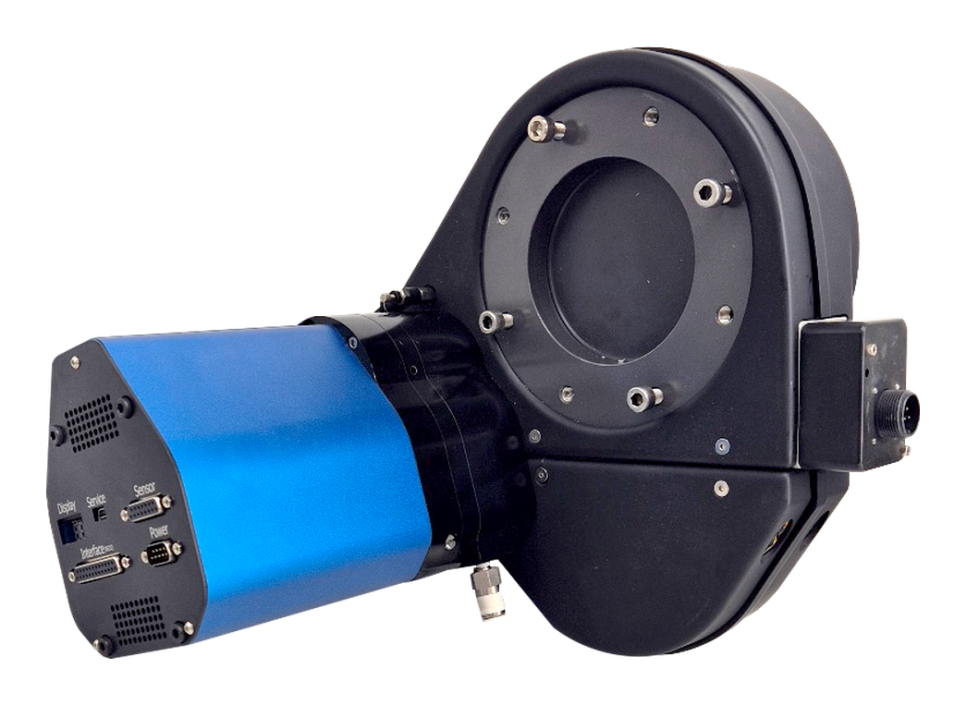
APC type pendulum valve showing the flange face together with the blue controller
The controller terminals are divided into power, sensor, interface, service and status display. Power is 24 VDC, the sensor terminal is the pressure gauge input, the interface is RS232 (RS485 optional), and the service terminal is for a USB connection.
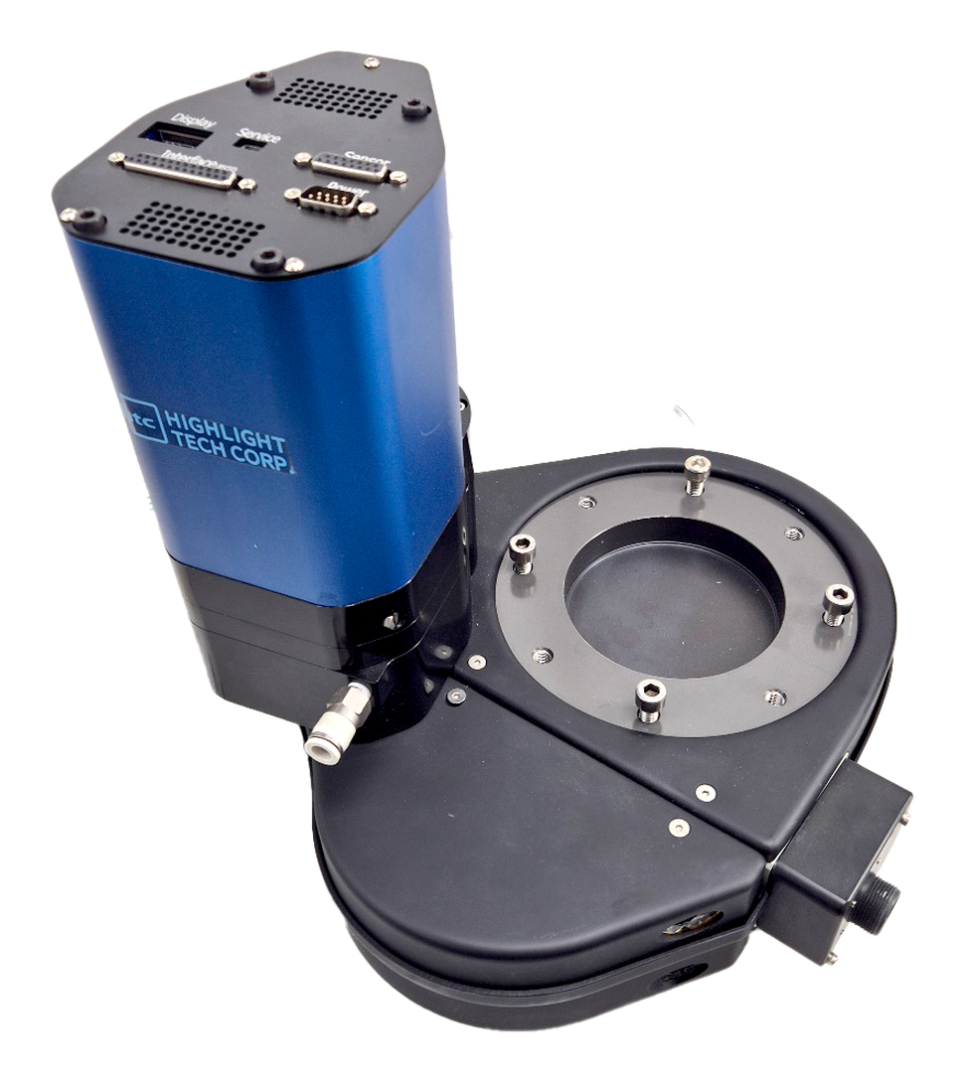
APC controller with Display, Service, Interface, Sensor and Power terminals on its top face
The PC software is used to set pressure control and position control modes, gain (the strength of the control response), opening and closing speed, and power failure protection, and to check cycle counts and operating time.
The specifications below are taken from the manufacturer's catalog.
Drive and control: stepper motor, position resolution 8,000 steps, control accuracy 0.1% of the sensor's full scale
Inputs and outputs: sensor input 0 to 10 V on 2 channels, analog output 0 to 10 V on 2 channels, power 24 VDC (power consumption 150 W)
Materials and seals: body and plate in aluminum A6061-T6, plate and bonnet O-rings in Viton (FKM)
Aluminum body: helium leak rate below 1×10⁻⁹ mbar·L/s (at 1 atm differential pressure), operating pressure 1×10⁻⁸ mbar to 1.2 bar
Hard-anodized body: helium leak rate below 1×10⁻⁵ mbar·L/s (at 1 atm differential pressure), operating pressure 1×10⁻⁶ mbar to 1.2 bar
Differential pressure: maximum differential pressure 1.2 bar, 5 mbar or less when opening
Bake-out: body 120°C or below, actuator 70°C or below
Service life: 200,000 open/close cycles, 1,000,000 cycles in pressure control use
Option: heater (with insulation on the hard-anodized type)
The aluminum body and the hard-anodized body have different leak rate specifications. The hard-anodized body has a leak rate value four orders of magnitude larger and a higher lower limit of operating pressure. For conditions that need ultra-high vacuum or a bake-out above 120°C, checking the specification comes first.
The connection dimensions and weight for each size are shown in the table below. Whether the valve matches existing equipment can be checked starting with the port diameter and the bolt circle diameter (PCD, the diameter of the circle on which the bolt holes lie).
| Size | Port diameter (mm) | Flange outer diameter (mm) | Bolt circle diameter (mm) | Weight |
|---|---|---|---|---|
| ISO-F 200 (8 inch) | 200 | 300 | 260 | 22 kg |
| ISO-F 250 (10 inch) | 254 | 335 | 310 | 31 kg |
| ISO-F 320 (12 inch) | 318 | 428 | 395 | 51 kg |
ISO-F 200 (8 inch): port diameter 200 mm, flange outer diameter 300 mm, bolt circle diameter 260 mm, 22 kg
ISO-F 250 (10 inch): port diameter 254 mm, flange outer diameter 335 mm, bolt circle diameter 310 mm, 31 kg
ISO-F 320 (12 inch): port diameter 318 mm, flange outer diameter 428 mm, bolt circle diameter 395 mm, 51 kg
Besides the APC type, there are 3-position and pneumatic types in the same sizes, and both are driven by compressed air at 4 to 6 kg/cm².
| Type | Drive | Features |
|---|---|---|
| APC type | Stepper motor, dedicated controller | Continuous adjustment of the opening by pressure control and position control |
| 3-position | Electro-pneumatic cylinder | In addition to open and closed, one intermediate position adjusts pressure in a single step; position is confirmed by reed sensors |
| Pneumatic, double-acting | Electro-pneumatic cylinder | For open and close operation |
| Pneumatic, single-acting | Electro-pneumatic cylinder | Normally closed, for open and close operation; also available in ISO400 |
APC type: stepper motor and dedicated controller, continuous adjustment of the opening by pressure control and position control
3-position: electro-pneumatic cylinder; in addition to open and closed, one intermediate position adjusts pressure in a single step, and position is confirmed by reed sensors
Pneumatic, double-acting: electro-pneumatic cylinder, for open and close operation
Pneumatic, single-acting: electro-pneumatic cylinder, normally closed, for open and close operation; also available in ISO400
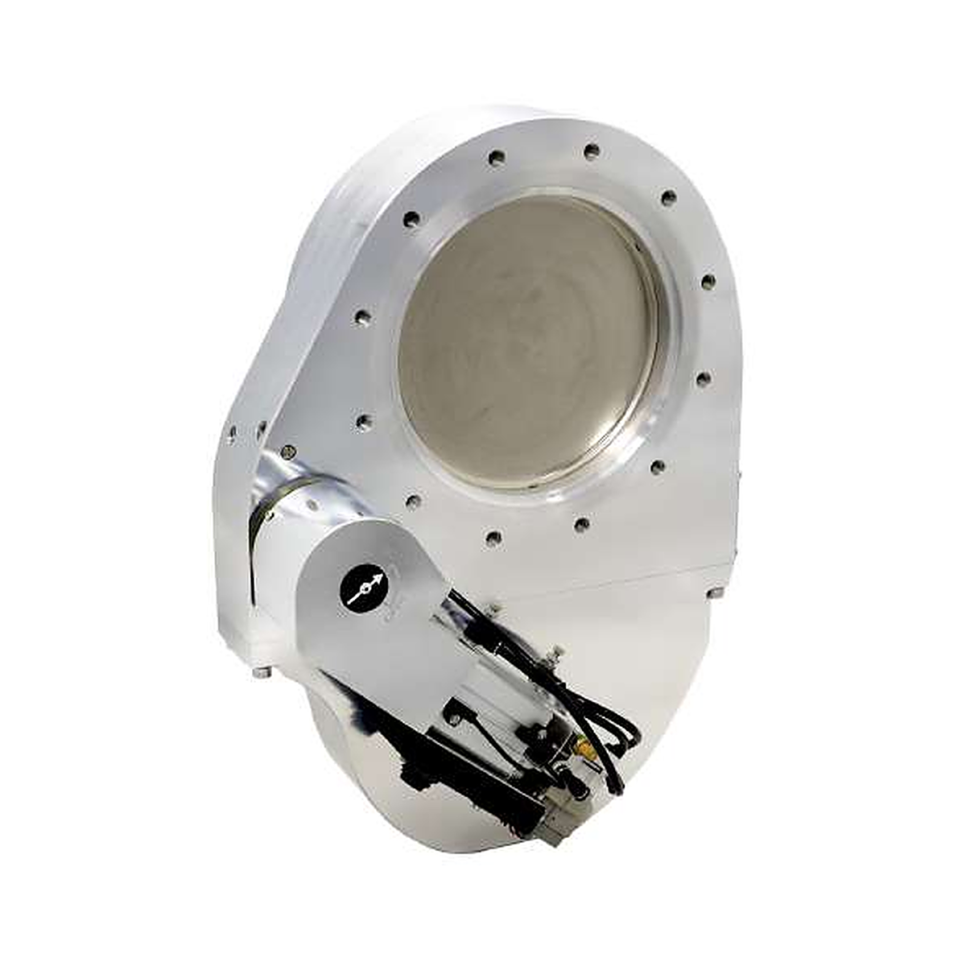
Pneumatic pendulum valve with the plate covering the opening visible inside the flange face
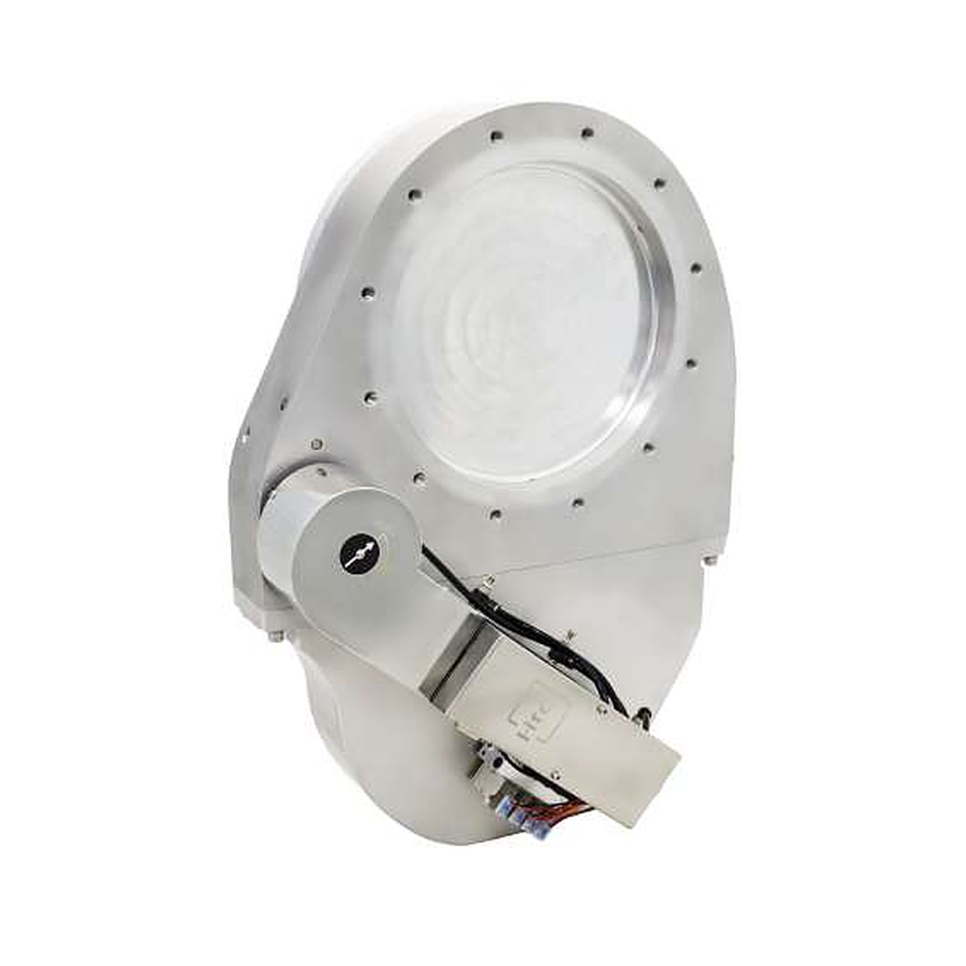
3-position pendulum valve showing the plate covering the opening together with the actuator section
APC type for continuous pressure control, pneumatic type for open and close
Supply of pendulum valves is concentrated in a few makers, so relying on a single supplier narrows the room to choose lead time and price conditions.
Splitting supply between two sources (a second source) leaves room to respond through the other side when one side's schedule slips or its conditions change.
HTC (Highlight Tech Corp.) is a vacuum valve and chamber manufacturer founded in Taiwan in 1997. It holds ISO 9001, ISO 14001 and ISO 45001, the management certifications for quality, environment, and occupational health and safety, and also runs a valve repair service.
When putting the HTC pendulum valve supplied by VALVEPARK forward as a second source candidate, lead time, price burden and domestic support can be weighed together.
1️⃣ Lead time: on the shorter side.
2️⃣ Price: the price burden is lower, which makes it easy to include in a comparative quotation.
3️⃣ Domestic support: VALVEPARK handles technical consultation, repair and replacement of consumable parts in Korea.
Actual lead time and price depend on size, specification and quantity, and are settled in the quotation.
A second source candidate: the HTC pendulum valve
Q. Can the HTC valve take the place of a pendulum valve already in use?
Replacement can be reviewed only where the flange standard and bolt circle diameter are the same and the controller communication method and pressure gauge signal match. Valve length, controller position and communication with the control program on the equipment side are checked against the drawings and specifications. Even at the same size, whether replacement is possible cannot be stated before the drawings have been reviewed.
Q. What happens to the plate if air or power is cut off?
The single-acting type is a normally closed specification and stays in the closed position when there is no air supply. The APC type has backup power in the controller, and power failure protection is set in the software.
Q. Do the pressure gauge and the controller have to be prepared separately?
The controller comes mounted on the valve, so it does not have to be prepared separately; only a pressure gauge that matches the sensor port specification is connected. A gauge with a linear 0 to 10 V output that runs on a sensor supply of 24 VDC or ±15 VDC (500 mA) can be connected.
Q. What should I tell you when sending a valve for repair?
Whether to replace the seals (O-rings) and how to proceed with inspection are decided from the size, the controller display status, the symptoms, and the number of open/close cycles so far.
| Chamber pressure control and isolation | HTC pendulum valve, APC type Stepper motor, pressure control and position control, ISO-F 200, 250 and 320 |
| High vacuum pump isolation | HTC gate valve CF, KF and ISO flanges |
| Backflow prevention on the exhaust line | HTC vacuum check valve For vacuum exhaust lines |
If you let us know the conditions below, we can start reviewing the specification.
1️⃣ Size: the standard needed among ISO-F 200, 250 and 320, or the port diameter and bolt circle diameter
2️⃣ Type: APC type, 3-position, or pneumatic (double-acting or single-acting)
3️⃣ Body and options: aluminum or hard-anodized, and whether a heater is needed
4️⃣ Control: for the APC type, the communication method (RS232 or RS485) and the pressure gauge signal; for the pneumatic type, the supply air pressure
5️⃣ Process conditions: gas type and temperature, the bake-out temperature needed, and the plate position needed when air or power is cut off
6️⃣ Quantity and desired lead time
Please contact us if you need a specification sheet or more detailed materials.
You can see a pendulum valve in person at SEDEX 2026 (October 14 to 16, COEX 3F Hall D), booth D129.
▸ View product: HTC pendulum valve
| Purchase and Inquiries VALVEPARK official contact | |
|---|---|
| sales@valvepark.com | |
| Phone | 1666-0215 |
| KakaoTalk channel | https://pf.kakao.com/_lxftVxj |
| Buying piping materials, made simple and quick. | |
| You can find product details and purchase options at the links below. | |
| Website | https://www.valvepark.com/?utm_source=naver_blog&utm_medium=blog&utm_campaign=pendulum-valve |
| Smart Store | https://smartstore.naver.com/valvepark?nt_source=naver_blog&nt_medium=blog&nt_detail=pendulum-valve |