About this series · Semiconductor Vacuum System Component Guide (5 parts)
- Part 1 Overall layout and gas supply: UHP valves, MFCs, check valves
- Part 2 Chamber valves: gate valves and throttle valves ◀ You are reading this part
- Part 3 Pumps: dry pumps and turbomolecular pumps
- Part 4 Piping connections: KF, ISO, and CF flanges
- Part 5 Pressure measurement: vacuum gauges and a checklist before choosing parts
Previously
Part 1 covered the overall layout of a vacuum system and the gas supply section. The gas line is kept clean with UHP diaphragm valves, delivered in a set amount by an MFC, and kept from flowing backward by a check valve.
At a glance
- Gate valve: for shutting off, opening and closing the line completely
- Throttle valve: for regulating, setting chamber pressure by how far it is open
- VALVEPARK: tell us your flange standard and leak specification, and we will match the valve and controller combination
Once the gas is in the chamber, the next thing to look at is the side where it gets pumped out. A gate valve and a throttle valve are usually installed together between the chamber and the pump. Part 2 covers the difference between the two valves, how chamber pressure is set, and the valves used on the roughing line.
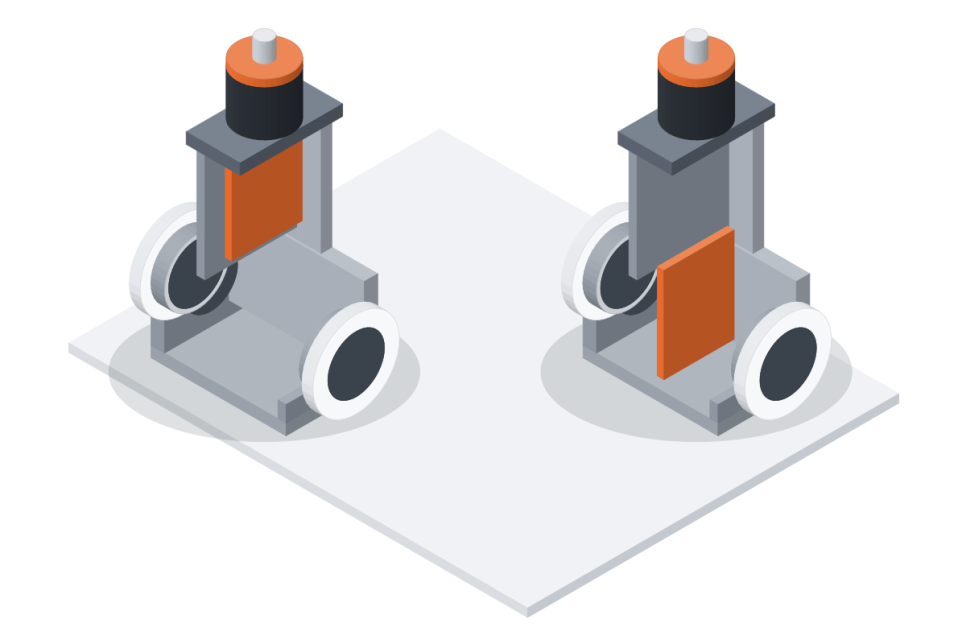
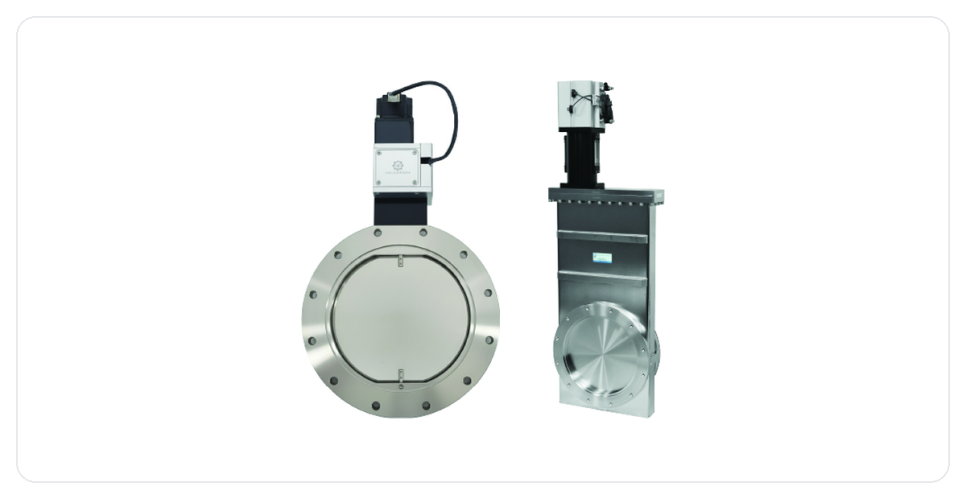
A gate valve shuts off the line by fully opening or closing the path between the chamber and the pump, and a throttle valve sets chamber pressure by adjusting how far it is open.
When a gate valve is open, nothing obstructs the passage, so it can use the pumping passage to its full width. A vacuum valve must not reduce the pumping speed, and when fully open it should give a conductance close to that of a pipe of the same diameter. Conductance is a value that shows how easily gas passes through that pipe or component.
Shutting off is the gate valve's job, and regulating is the throttle valve's job.
There are two ways to set chamber pressure. You can change the amount of gas going in, or regulate (throttle) the amount going out. The outgoing side is regulated with a butterfly valve or a throttle valve.
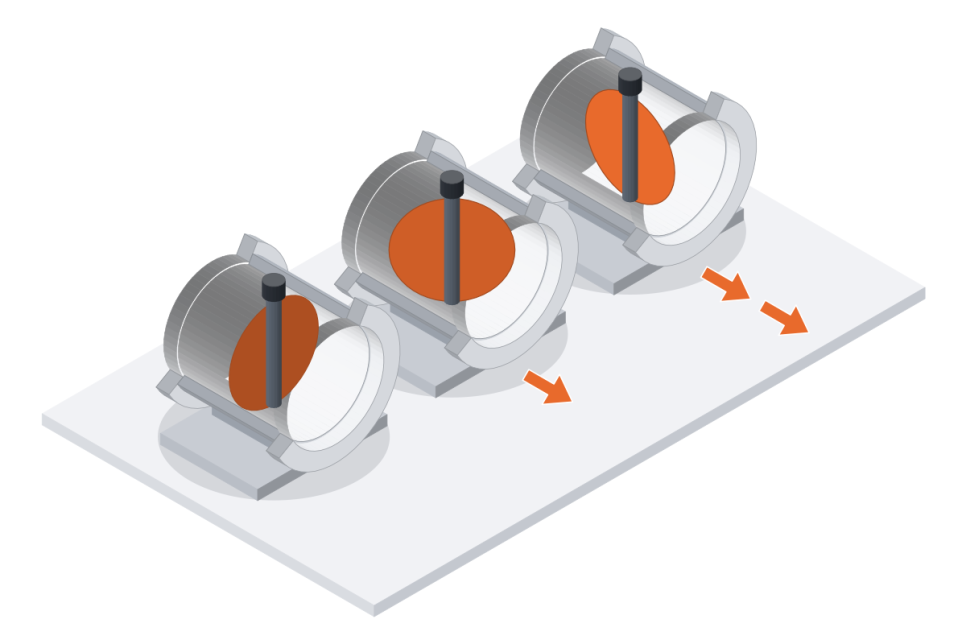
Automatic pressure control (APC) usually works like this. A gauge mounted on the chamber measures the pressure, and the controller compares it with the target pressure and keeps adjusting the throttle valve opening in small steps. If the pressure is higher than the target, it opens the valve further to pump out faster, and if it is lower, it opens less.
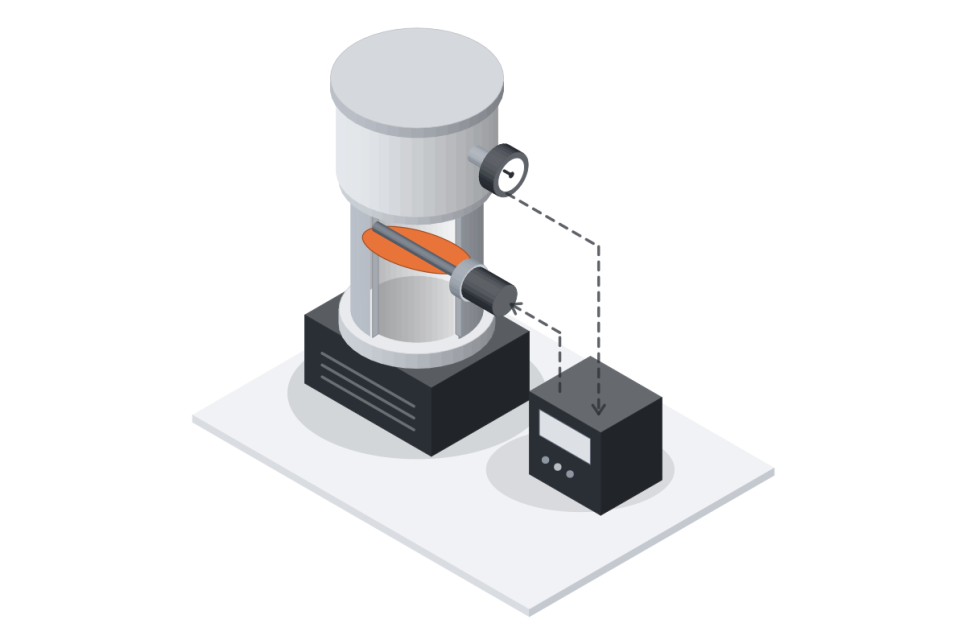
However, chamber volume and actual pumping speed differ from process to process, which makes control prone to oscillation, so it is safer to match the valve and controller as a set.
It is safer to match the valve and controller as a set.
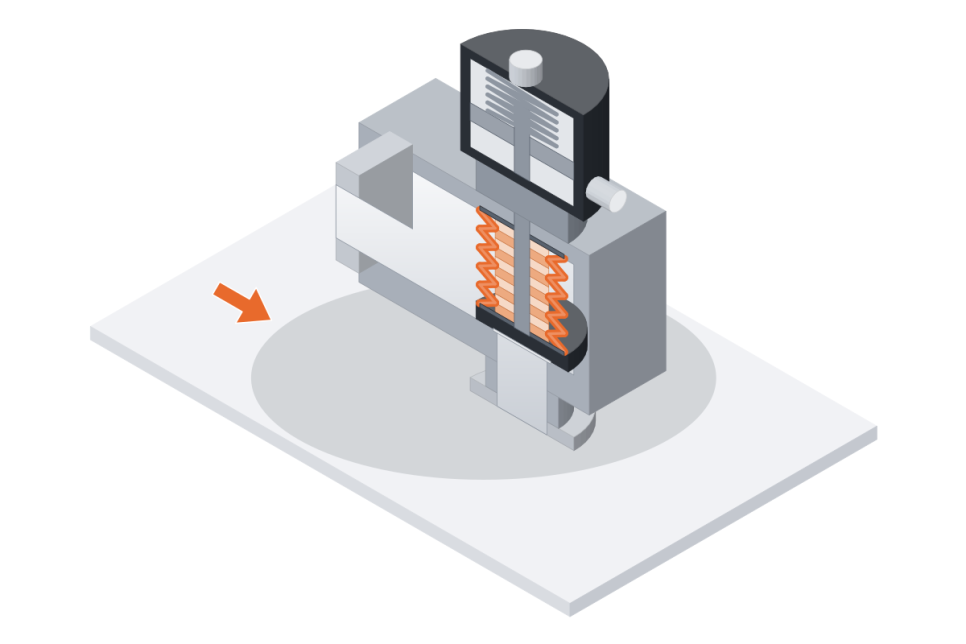
Angle valves are mainly used. Roughing and foreline valves are used when first pumping down a chamber from atmospheric pressure, and on the piping in front of the pump. The vent valve that lets gas in when the chamber is returned to atmospheric pressure is also part of this section.
Where tightness matters especially, a valve whose stem is wrapped in a metal bellows to separate it from the atmosphere is used. The leak rate of these medium- and high-vacuum valves is usually below 10⁻⁹ mbar·L/s.
If you rough with an oil-sealed rotary pump, oil vapor can rise toward the chamber once the chamber pressure drops below about 15 Pa. That is why it is usual to close the roughing valve at a suitable pressure.
| VALVEPARK recommended configuration | ||
|---|---|---|
| Pressure control | VSYS VT413 throttle valve (APC) | Sets chamber pressure by adjusting the opening |
| Shut-off | HTC gate valve | Supports CF/KF/ISO flanges |
| Roughing and foreline | VALVEPARK vacuum pneumatic angle valve (SUS304, single acting, bellows seal) | NW16 to NW160, helium leak tested before shipment |
▸ Tell us your chamber flange standard and the leak specification you need, and we will put together a matching combination of gate valve and throttle valve.
Q. Can I control pressure with a gate valve?
A. We do not recommend it. A gate valve is meant to be fully opened or fully closed, so use a throttle valve for setting pressure with the valve partly open.
Q. Will replacing only the throttle valve stabilize the pressure?
A. Not necessarily. Chamber volume and pumping speed differ from process to process, so you need to match the valve and controller as a set and tune them under the process conditions to get stable pressure.
Q. Can I rough with an oil rotary pump?
A. Yes. However, if the chamber pressure falls below about 15 Pa, oil vapor can rise, so close the roughing valve at a suitable pressure.
◂ Previous: Part 1 Overall layout and gas supply, UHP valves and MFCs
▸ Next: Part 3 Pumps, dry pumps and turbomolecular pumps
📞 Purchase and inquiries
📩 VALVEPARK official contact
Email: sales@valvepark.com
Phone: 1666-0215
KakaoTalk channel: https://pf.kakao.com/_lxftVxj
Buying piping materials becomes the easiest, fastest task.
📦 You can find product details and purchase information at the links below.
Homepage: https://www.valvepark.com/?utm_source=naver_blog&utm_medium=blog&utm_campaign=semiconductor-vacuum-2-chamber-valves
Smartstore: https://smartstore.naver.com/valvepark?nt_source=naver_blog&nt_medium=blog&nt_detail=semiconductor-vacuum-2-chamber-valves