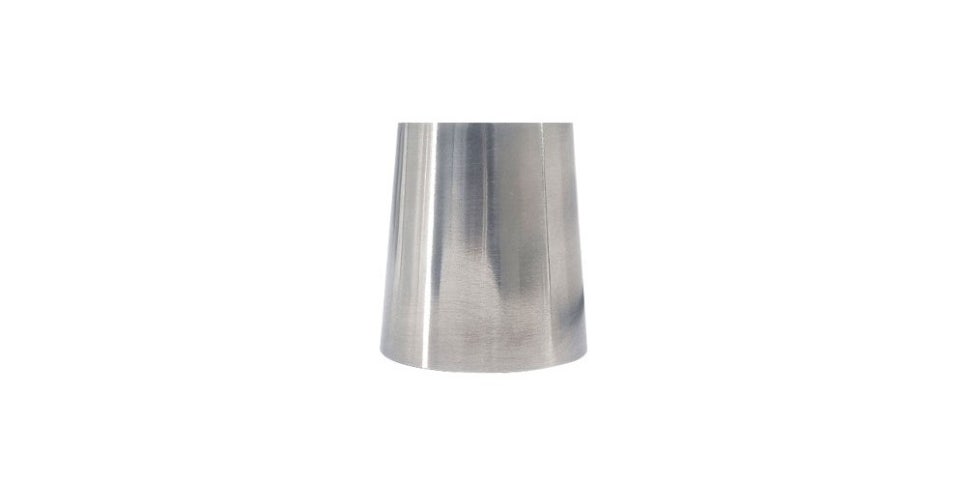
Hello, this is VALVEPARK.
If you are new to piping systems, you may be wondering what a reducer is.
It is a pipe fitting used to connect pipes of different sizes.
For example, when a large pipe has to be connected to a small one, the pipe size changes abruptly, so you need a fitting in between that changes the diameter smoothly.
The typical product used for this is the reducer.
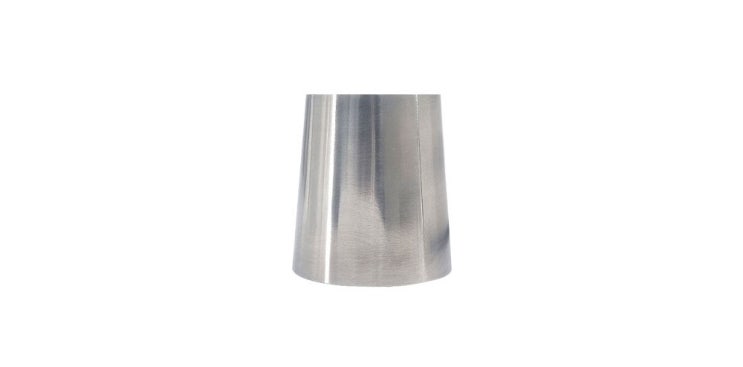
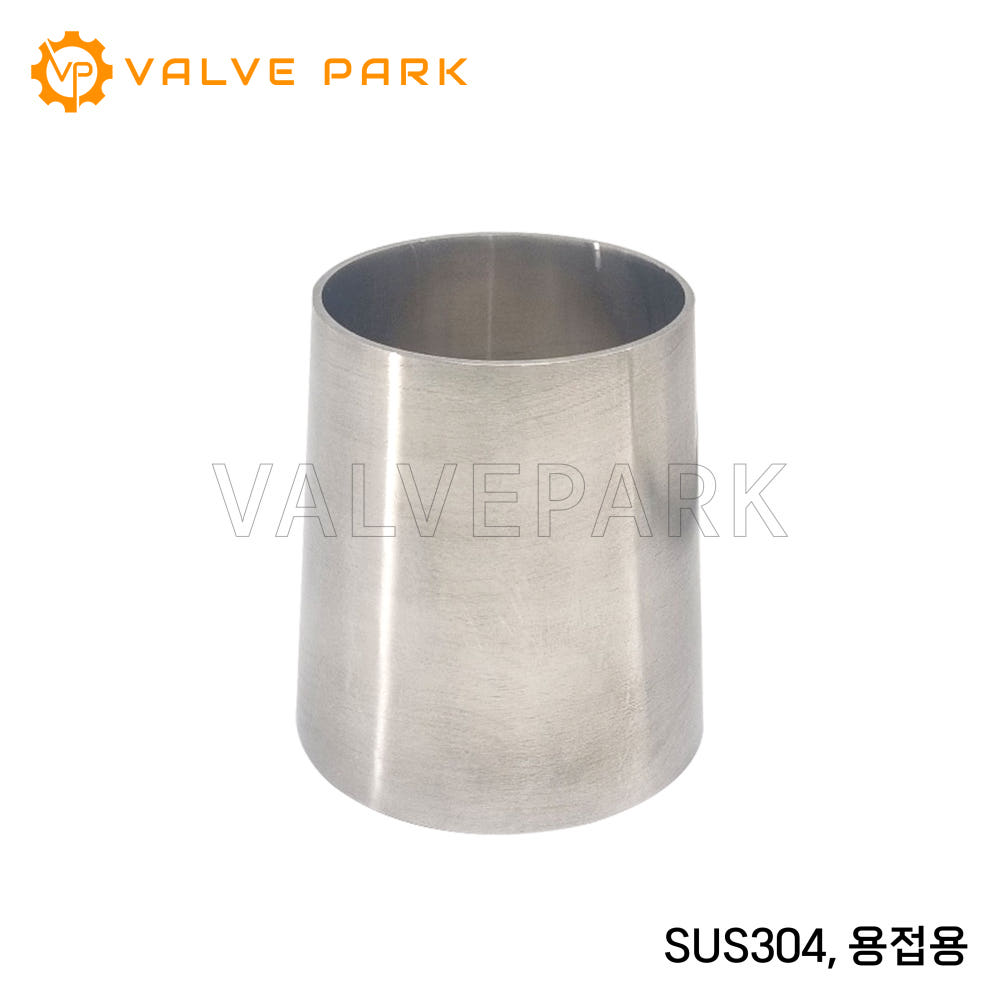
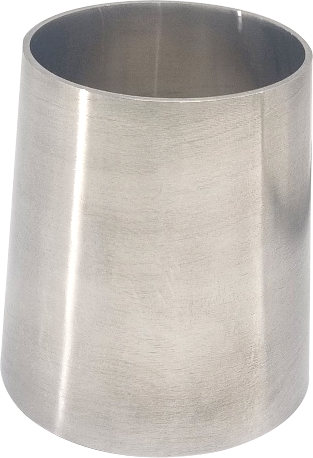
Today we are introducing not an ordinary reducer but a sanitary concentric reducer, which is suited to hygienic piping.
Sanitary refers to piping systems that require hygienic control.
It is used mainly in industries where product cleanliness and control of the pipe interior are important, such as food, beverages, pharmaceuticals, biotechnology and chemicals.
Concentric means that the large pipe and the small pipe share the same center axis.
A weld-type pipe fitting that connects different pipe diameters in hygienic piping
and keeps the centers of both pipes aligned
That is an easy way to understand a sanitary concentric reducer.
Sanitary reducers come with several connection types.
The product we are introducing today is the weld type.
With the weld type, both ends of the product are welded directly to the pipe.
It is therefore better suited to fixed piping sections that stay in service once installed than to places where the piping has to be taken apart often.
Weld-type reducers are widely used where the whole line has to be built as a continuous welded structure, such as the main line of a hygienic piping system.
Because the connection is welded, there is no separate clamp joint, which helps secure the tightness and continuity of fixed piping.
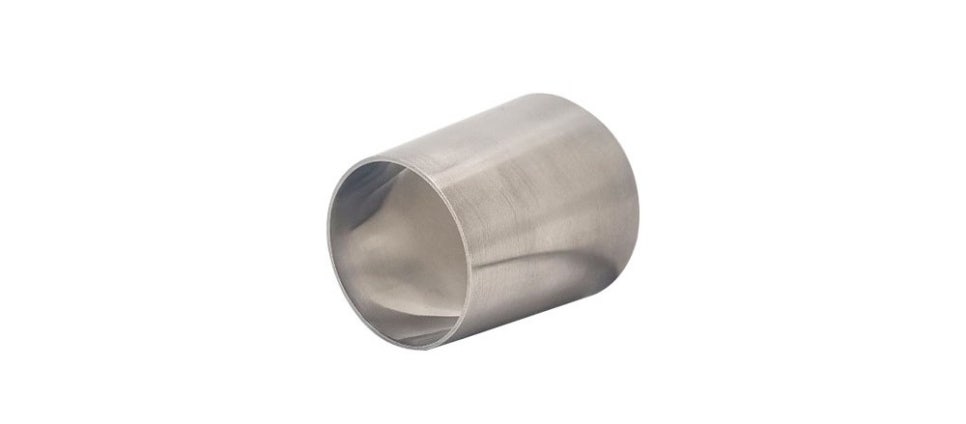
This is a question often asked by people who are new to sanitary piping.
With the weld type, the pipe and the fitting are welded directly together.
It is therefore suited to fixed piping that does not need to be disassembled.
✔ Suited to fixed piping
✔ Allows a continuous welded structure
✔ Suited to sections where the joint does not need to be disassembled
✔ Gives the piping system a clean layout
The ferrule type, on the other hand, is connected using a tri-clamp or similar.
The clamp can be released to separate the piping when needed, so it is suited to sections that have to be disassembled and reassembled for cleaning or maintenance.
You can choose between them along these lines.
When you look into reducers, you will often see the terms concentric and eccentric.
The biggest difference between the two is how the pipe centers are connected.
In a concentric reducer, the center axes of the large pipe and the small pipe coincide.
It therefore has a shape that is symmetrical about the center of the pipe.
Because of this, it is used mainly in vertical piping and in sections where flow symmetry is important.
An eccentric reducer has one side kept flush.
In horizontal piping in particular, it is used to reduce liquid pooling or air being trapped inside the pipe, depending on the installation orientation.
So it is not that concentric is always better or eccentric is always better. What matters is choosing according to the pipe orientation and the process conditions.
| Item | Concentric reducer | Eccentric reducer |
|---|---|---|
| Structure | Center axes of the large and small pipes coincide | One side is kept flush |
| Shape | Symmetrical about the center | Flat on the top, the bottom or one side |
| Key feature | Keeps the pipe center constant | Helps reduce internal pooling or trapped air, depending on the installation orientation |
| Typical piping | Vertical piping, sections where center alignment matters | Horizontal piping, sections that need drainage or trapped-air control |
| Selection criterion | When flow symmetry and a constant center axis matter | When pipe orientation and prevention of fluid pooling matter |
If you are looking for a sanitary concentric reducer, it is suited to the following uses.
✔ When you need to change the diameter of hygienic piping
✔ When you use SUS304 stainless steel piping
✔ When you are building fixed piping that does not need disassembly
✔ When you want to connect the piping by welding
✔ When you are building food and beverage production equipment
✔ When you need to step the pipe size down from a large bore to a small bore
✔ When the pipe center axis must be kept constant
With reducers, rather than choosing by shape alone, it is important to check the exact specification of the pipes to be connected.
Please check the following before selecting a product.
| Item to check | What to check |
|---|---|
| Pipe size | The exact specification of the large end and the small end |
| Material | SUS304, or consider SUS316L to suit the operating environment |
| Connection type | Whether it is weld type or ferrule type |
| Pipe orientation | Whether the piping is vertical or horizontal |
| Reducer form | Consider concentric or eccentric type |
| Surface finish | Standard polishing or electropolished specification |
| Fluid | Temperature, concentration, corrosiveness and so on of the fluid |
| Welding conditions | Whether site welding and back purging apply |
🔧
The sanitary concentric reducer, SUS304 weld type, that we introduced today is a stainless steel pipe fitting used to connect different pipe diameters in hygienic piping.
Made of SUS304 and polished to suit hygienic piping, it can be used at fixed-piping diameter transitions on a wide range of industrial sites, from food and beverages to pharmaceuticals, biotechnology, chemicals and secondary batteries.
In particular, the weld-type product is suited to fixed piping that is not separated often, and the concentric structure is characterized by aligning the center axes of both pipes.
Concentric and eccentric reducers each have a different structure and different advantages, so the choice should be made according to the pipe orientation and the process conditions.
If you find product selection difficult, please contact us right away using the details below!
Email: sales@valvepark.com
Phone: 1666-0215
🔧
📩 VALVEPARK official contact
Email: sales@valvepark.com
Phone: 1666-0215
VALVEPARK is a trusted company that specializes in supplying a wide range of industrial valves, and stays competitive through customer-specific specifications, fast delivery and thorough quality control.
📦 You can find product details and purchase information at the links below.