
About this series · Semiconductor Vacuum System Component Guide (5 parts)
- Part 1 Overall layout and gas supply: UHP valves, MFCs, check valves
- Part 2 Chamber valves: gate valves and throttle valves
- Part 3 Pumps: dry pumps and turbomolecular pumps
- Part 4 Piping connections: KF, ISO, and CF flanges
- Part 5 Pressure measurement: vacuum gauges and a checklist before choosing parts ◀ You are reading this part
Previously
Part 4 covered piping connection standards. The summary was to choose KF for small piping, ISO-K or ISO-F for large piping, and CF with a copper gasket for ultra-high vacuum that needs heating.
At a glance
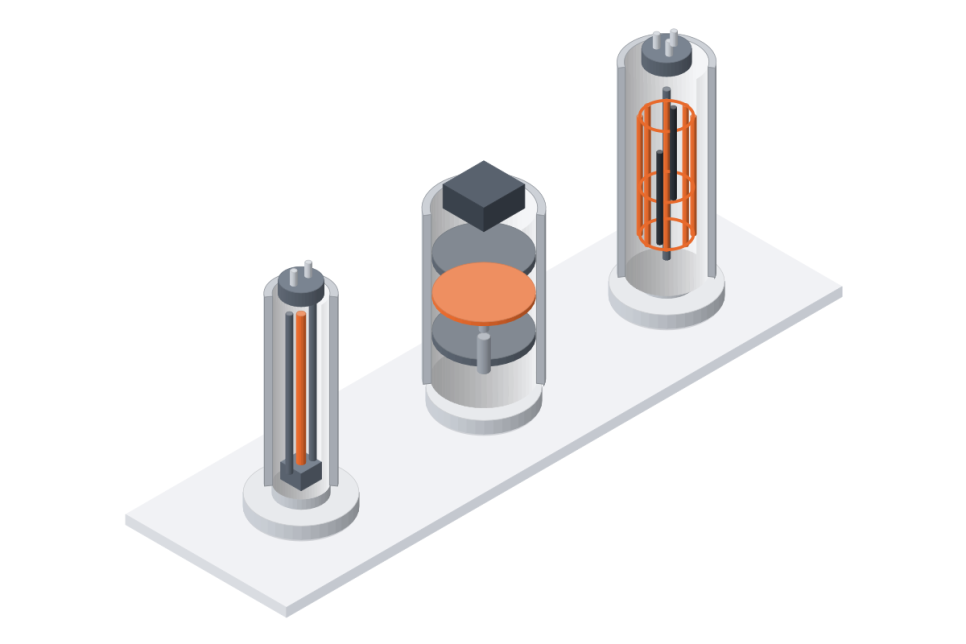
- Pirani: wide range from atmospheric pressure to about 10⁻⁴ mbar, for monitoring and control
- Capacitance: absolute pressure below 1 mbar, independent of gas type
- Ionization: for high vacuum and below, hot cathode for precise measurement
Vacuum gauges use different methods depending on the pressure range they measure. It is hard for a single gauge to measure everything from atmospheric pressure to high vacuum, so two or three types are usually installed together. This final part covers how to choose a gauge, and five things worth sorting out before you inquire about vacuum components.
There are three main types.
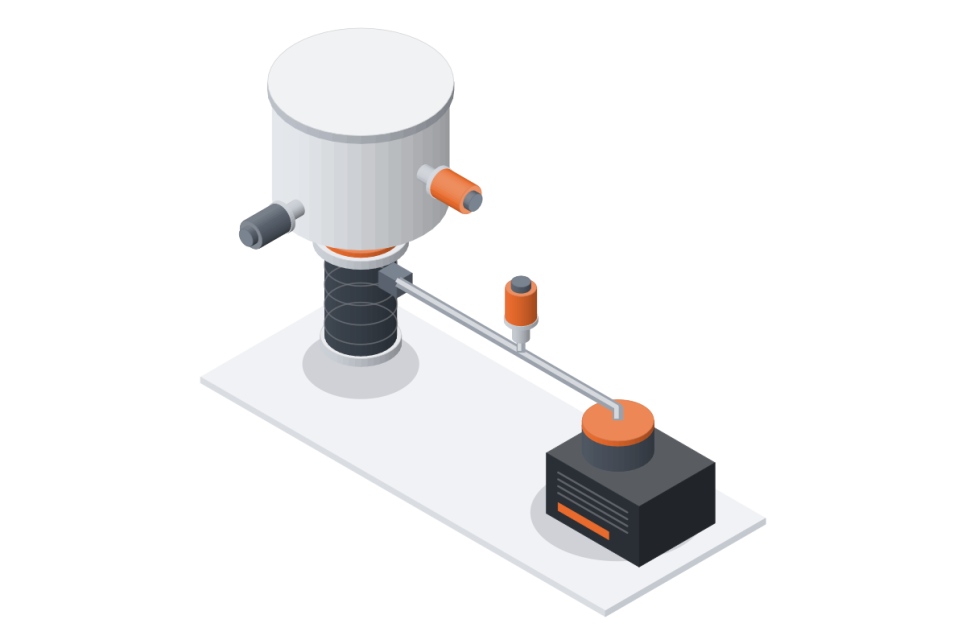
It is hard for a single gauge to measure everything from atmospheric pressure to high vacuum.
You install one wherever there is a pressure you need to measure. A common arrangement is to fit the chamber with a capacitance gauge for process pressure and a Pirani gauge for the wide range, and to add an ionization gauge if the chamber goes down to high vacuum. On the foreline behind the turbomolecular pump, a Pirani gauge is installed to monitor the backing pressure.
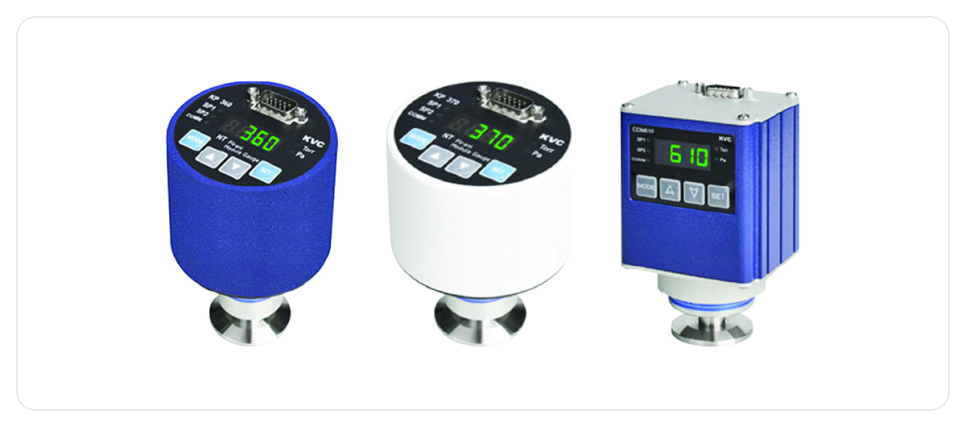
| VALVEPARK recommended configuration | ||
|---|---|---|
| Wide range | INFICON PSG50x Pirani vacuum gauge | Atmospheric pressure to about 10⁻⁴ mbar, for monitoring and control |
| Absolute pressure | INFICON SKY CDG025D capacitance diaphragm vacuum gauge | Below 1 mbar, independent of gas type |
▸ Tell us the pressure range you need to measure and your bake temperature, and we will match the gauge configuration and flange standard together.
Just sort out the five items below. The manufacturer and the standard differ from section to section on a vacuum line, so without this information it is hardest to get everything right in one go.
Once we have these five items, VALVEPARK proposes a suitable combination for each section. We supply valves, pumps, gauges, and piping components from multiple brands at once, so you save the effort of finding a separate supplier and getting a separate quote for each component. You can browse products by standard in the vacuum valve category on our homepage. Even for a product that is not on the homepage, if it is a brand we handle, we will check whether we can source it, and we will advise on stock and lead time as of the time you inquire.
Tell us just these five conditions, and we will put together a combination for each section, from the gas supply section to the gauges, in one go.
Q. Can a single gauge measure everything from atmospheric pressure to high vacuum?
A. It is difficult. A Pirani gauge covers atmospheric pressure down to about 10⁻⁴ mbar, and below that an ionization gauge takes over in high vacuum. If you need absolute pressure below 1 mbar that does not depend on gas type, use a capacitance gauge.
Q. Why does a Pirani gauge read differently for different gases?
A. Because a Pirani gauge measures pressure by how much heat the gas carries away from a heated wire. Each gas transfers heat to a different degree, so the reading differs even at the same pressure. If pressure referenced to the process gas matters, use a capacitance gauge together with it.
Q. Can I get consultation on all the components in the series at once?
A. Yes. Tell us the five conditions above, and we will put together a combination for each section, from the gas supply section to the gauges, in one go.
Over five parts we went through a semiconductor vacuum system section by section, from the gas supply section to the gauges. To go through it again from the beginning, start with Part 1.
◂ Previous: Part 4 Piping connections, KF, ISO, and CF flanges
📞 Purchase and inquiries
📩 VALVEPARK official contact
Email: sales@valvepark.com
Phone: 1666-0215
KakaoTalk channel: https://pf.kakao.com/_lxftVxj
Buying piping materials becomes the easiest, fastest task.
📦 You can find product details and purchase information at the links below.
Homepage: https://www.valvepark.com/?utm_source=naver_blog&utm_medium=blog&utm_campaign=semiconductor-vacuum-5-gauges
Smartstore: https://smartstore.naver.com/valvepark?nt_source=naver_blog&nt_medium=blog&nt_detail=semiconductor-vacuum-5-gauges