About this series · Semiconductor Vacuum System Component Guide (5 parts)
- Part 1 Overall layout and gas supply: UHP valves, MFCs, check valves
- Part 2 Chamber valves: gate valves and throttle valves
- Part 3 Pumps: dry pumps and turbomolecular pumps
- Part 4 Piping connections: KF, ISO, and CF flanges ◀ You are reading this part
- Part 5 Pressure measurement: vacuum gauges and a checklist before choosing parts
Previously
Part 3 covered pumps. Semiconductor lines use dry pumps to avoid oil contamination, and a dry pump is connected behind the turbomolecular pump as the backing pump.
At a glance
- KF: DN 10 to 50, the most common standard, tightened with a single clamp
- ISO-K and ISO-F: DN 65 to 630, for large piping
- CF: for ultra-high vacuum with a copper gasket, bakeable to 450 °C
Valves, pumps, and gauges are all connected by flanges. The connection standard is chosen by target pressure and bake temperature. Baking is the process of heating a vacuum vessel and its piping to drive off gas stuck to the surfaces. Part 4 covers the differences between the three standards, KF, ISO, and CF, and the order in which to choose.
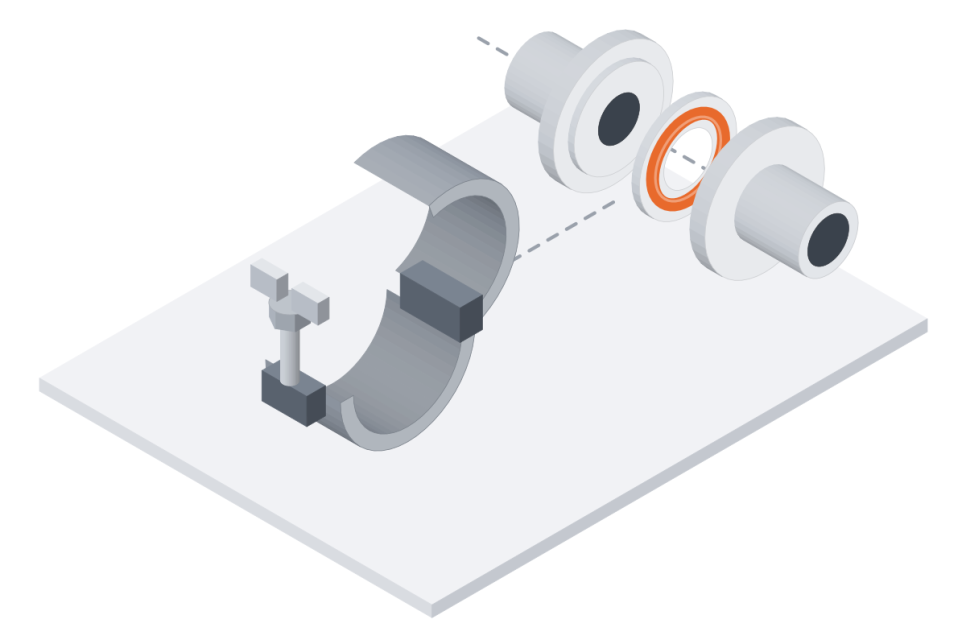
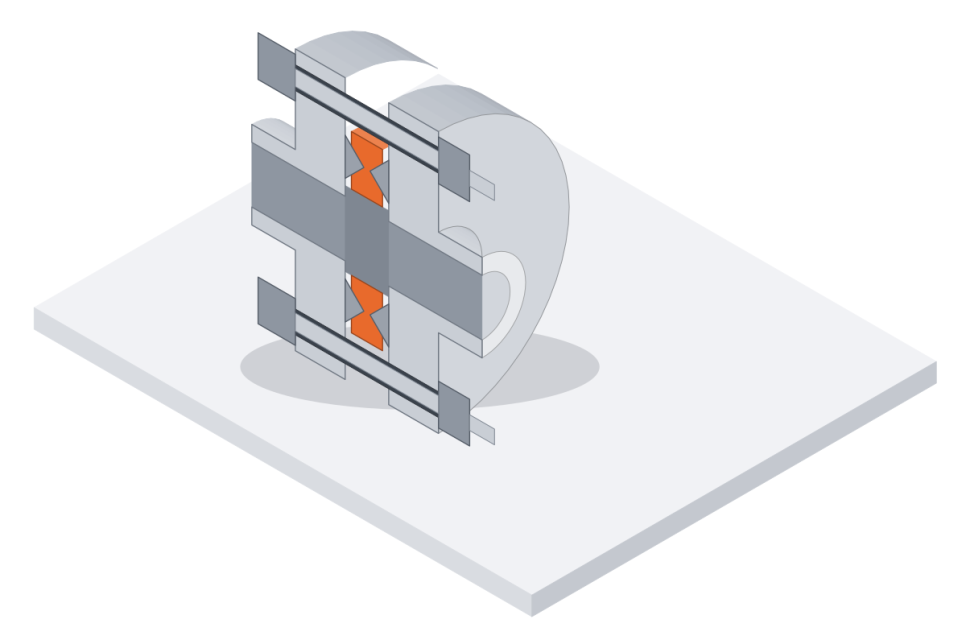
You fit a centering ring and tighten a single clamp. KF (small quick flange) has nominal sizes of DN 10 to 50 and is the most common standard in vacuum piping. For general gases at 80 °C or below, it is used from roughing to high vacuum with an NBR or CR O-ring.
The centering ring aligns the centers of the two flanges and holds the O-ring in position. The clamp can be tightened and loosened by hand with a wing nut, so it is convenient where you disassemble often.
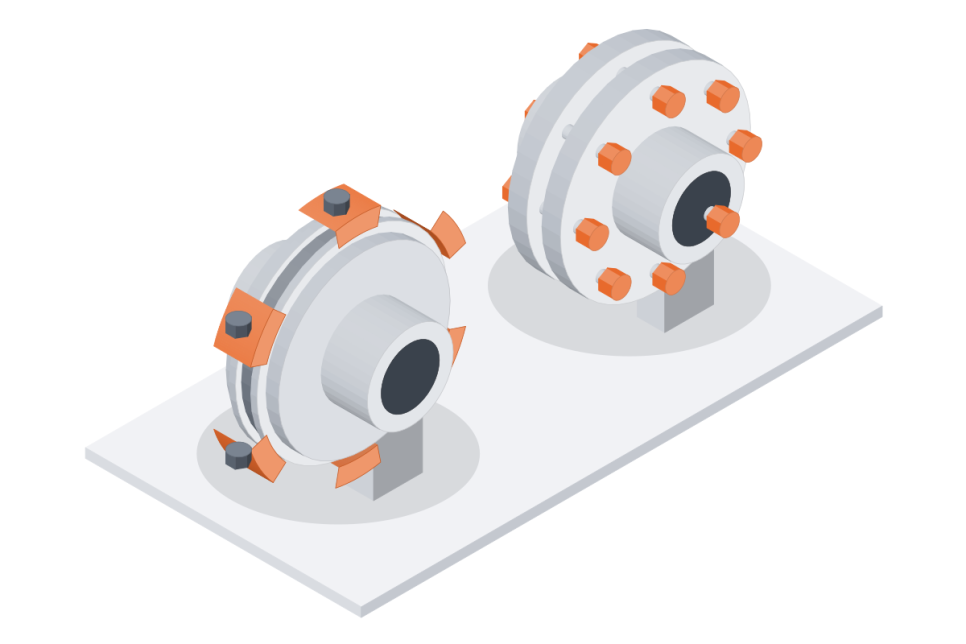
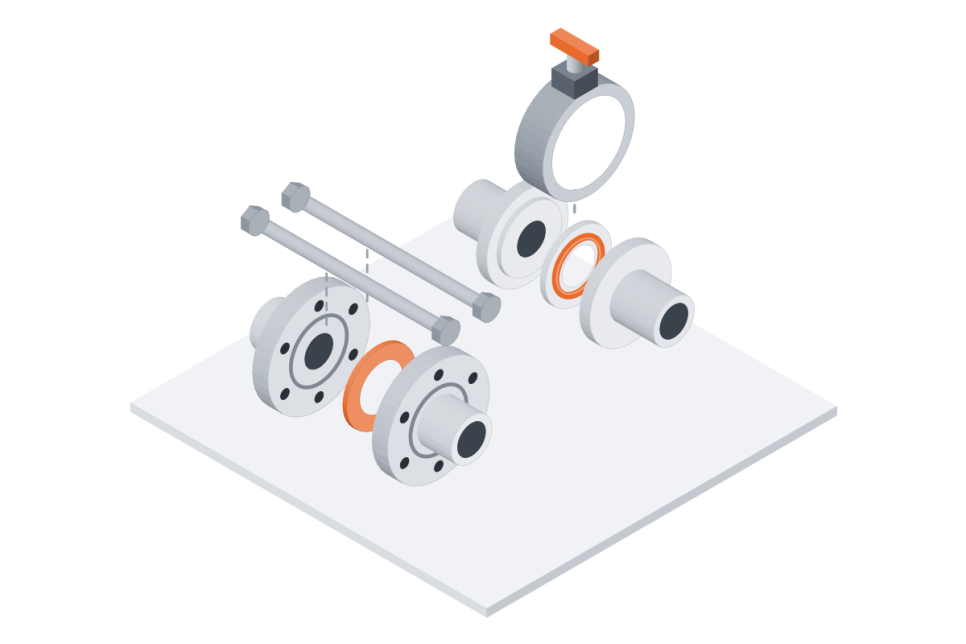
ISO flanges are used for large piping with nominal sizes of DN 65 to 630. ISO-K is tightened by pressing the outside of the flange with several claw clamps, and ISO-F is tightened with bolts through the holes in the flange. First check which type the mating flange is.
Because it does not leak even when heated. CF (CONFLAT) is a standard for ultra-high vacuum that uses a copper gasket. The knife edges on the flanges bite into the copper gasket to seal, and it can be baked up to 450 °C. A copper ring is replaced after one use.
O-rings have temperature limits. Viton (FKM) withstands about 150 °C, and an aluminum seal about 200 °C. So when choosing a standard, start by deciding whether heating is needed.
When choosing a standard, start by deciding whether heating is needed.
| VALVEPARK recommended configuration | ||
|---|---|---|
| Connection | Vacuum KF hinged clamp (aluminum, double pin) | Aluminum double pin, attached and removed without tools by a wing nut |
| Sealing | Vacuum centering ring & O-ring (SUS304, VITON) | SUS304 centering ring, VITON O-ring |
| Blanking | Vacuum KF blank flange (SUS304) | SUS304, a cap that closes the end of a pipe |
▸ Tell us your pipe nominal size and bake temperature, and we will match the flange standard and seal material together.
Q. What is the difference between KF and CF flanges?
A. KF connects with a centering ring that has an O-ring and a clamp, and is used from roughing to high vacuum at 80 °C or below for general gases. CF is for ultra-high vacuum with a copper gasket, so it can be baked up to 450 °C, and a copper ring is replaced after one use.
Q. What temperature can a Viton O-ring withstand?
A. About 150 °C. If you heat beyond that, consider an aluminum seal (about 200 °C) or the copper gasket of a CF flange.
Q. How do I choose a KF size?
A. Match it to the nominal pipe size (DN). KF covers DN 10 to 50, and beyond that you move to ISO-K or ISO-F.
◂ Previous: Part 3 Pumps, dry pumps and turbomolecular pumps
▸ Next: Part 5 Pressure measurement, vacuum gauges and a checklist
📞 Purchase and inquiries
📩 VALVEPARK official contact
Email: sales@valvepark.com
Phone: 1666-0215
KakaoTalk channel: https://pf.kakao.com/_lxftVxj
Buying piping materials becomes the easiest, fastest task.
📦 You can find product details and purchase information at the links below.
Homepage: https://www.valvepark.com/?utm_source=naver_blog&utm_medium=blog&utm_campaign=semiconductor-vacuum-4-flanges
Smartstore: https://smartstore.naver.com/valvepark?nt_source=naver_blog&nt_medium=blog&nt_detail=semiconductor-vacuum-4-flanges