Cleanroom Wiper (Microfiber, Laser Cutting, 1 Pack)
The cleanroom wiper is a dedicated cleanroom wiper made by laser-cutting microfiber fabric. It excels at removing residues and oily contaminants from the surface of objects to be cleaned and is optimized for absorbing small amounts of liquids. It is an essential product for precision surface management in high-cleanliness environments such as semiconductor, display, pharmaceutical, biotechnology, and laboratory applications.
Features
- Laser cutting applied (same process as POLY WIPER)
- Effective at removing residue and oil from cleaned surfaces
- Suitable for small-volume liquid absorption work
- No scratches or residue during cleaning
- Suitable for GLASS, SUS (polished surface), and LCD PANEL manufacturing processes
- Primarily used for cleaning products and raw materials
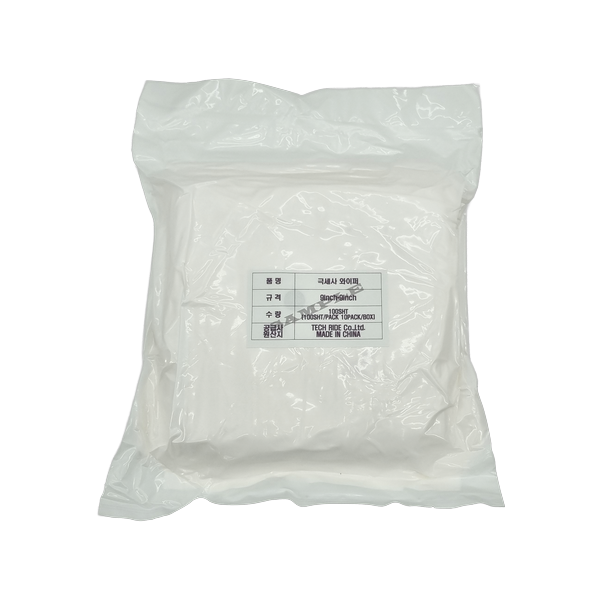
Specifications
| Material | Microfiber |
| Cutting Method | Laser cutting |
| Size | 9" × 9" (230 × 230mm) |
| Quantity | 100 sheets / pack |
| Box Configuration | 10 packs / box |
| Primary Use | Surface cleaning of products and raw materials; residue and oil removal |
| Applicable Surfaces | GLASS, SUS (polished surface), LCD PANEL |
Frequently Asked Questions
- How does the laser cutting method of cleanroom wipers affect product performance?
- Laser cutting heat-seals the cut edge of the fabric, minimizing fiber shedding and particle generation during use. This helps maintain the high cleanliness required in cleanroom environments and avoids leaving scratches or residue on the cleaned surface, contributing to lower product defect rates.
- What types of contaminants are micro-fiber cleanroom wipers most effective at removing?
- Thanks to the fine fiber structure, micro-fiber wipers excel at removing residue, fine particles, and oily substances from the surface being cleaned. They are particularly optimized for absorbing small amounts of liquid and for precision cleaning.
- What about service life and reuse of the product?
- Cleanroom wipers are intended for single use as a rule. Although it depends on contamination level, reuse increases the likelihood of particle generation and is therefore not recommended. Disposal should follow the regulations of each cleanroom.
- What is the most important consideration when selecting a cleanroom wiper?
- The most important factors are the cleanroom class to be applied and the characteristics of the cleaning target. Material, cutting method, absorbency, and presence or absence of particle generation should all be considered together to select the optimal product.