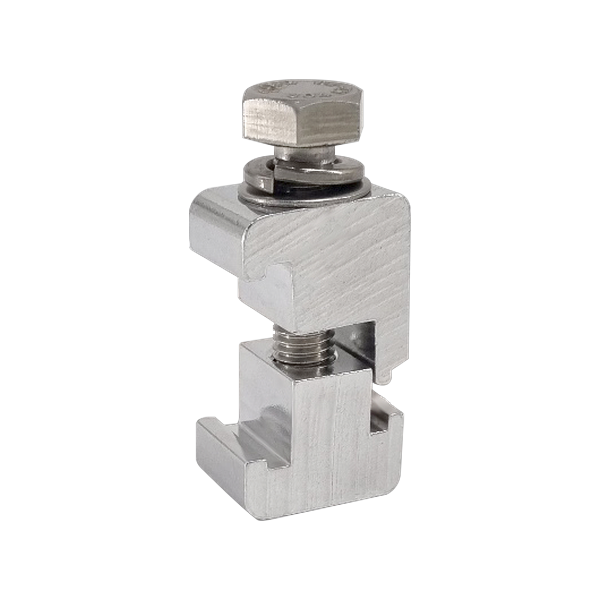
Vacuum ISO Double Wall Clamp (Aluminum)
Model: PVF-14
PVF-14 is a double-claw aluminum clamp that secures ISO-K standard vacuum flanges. The lightweight aluminum material makes handling and installation easy, and it is used for large-bore vacuum-piping connections in semiconductor, display, solar, and laboratory applications.
Specifications
| Material | AL |
| Origin | China, South Korea |
| Size | M8, M10, M12 |
Frequently Asked Questions
- What is the difference between ISO-K and ISO-F flanges?
- ISO-K is a method where both flanges have smooth flange faces fastened with external clamps, suited for lines requiring frequent attachment/detachment or rapid assembly. ISO-F has bolt holes machined on one or both sides, allowing bolt fastening and used for sections with severe vibration or load. The two standards have similar basic dimensions and some combinations are possible, but they should be selected separately based on operating conditions.
- Must clamps and centering rings always be used as a set?
- Yes. ISO flanges have a standard configuration where a centering ring (with O-ring) is sandwiched between two flanges and fastened with a clamp. Direct fastening without the centering ring may destabilize the O-ring position and degrade sealing, so prepare clamps, centering rings, and O-rings as same-size sets.
- How do I choose between aluminum and stainless clamps?
- Aluminum clamps offer advantages in light weight and price, and are widely used in general high vacuum (HV) lines. Stainless clamps cost more but offer excellent strength and corrosion resistance, suitable for environments with severe vibration, corrosive atmospheres, or high-temperature lines. Aluminum is the standard choice for typical vacuum exhaust lines.
- Up to what vacuum level can it be used?
- ISO flange systems are standardly used in the general high vacuum (HV) range. For environments requiring ultra-high vacuum (UHV), the CF flange system is appropriate, so tell us the operating environment and we will advise on suitability and alternatives.